Banking Khabar / Rising tensions in West Asia are posing a significant threat to Nepal’s remittance inflows, with nearly half of the earnings at risk due to instability in Gulf nations such as Qatar, Saudi Arabia, Bahrain, Kuwait, the United Arab Emirates, and Oman. The situation has escalated following joint military strikes by the United States and Israel on Iran, prompting retaliatory missile and drone attacks across the Gulf region. The ongoing conflict has disrupted daily life, business operations, and employment, creating widespread uncertainty.
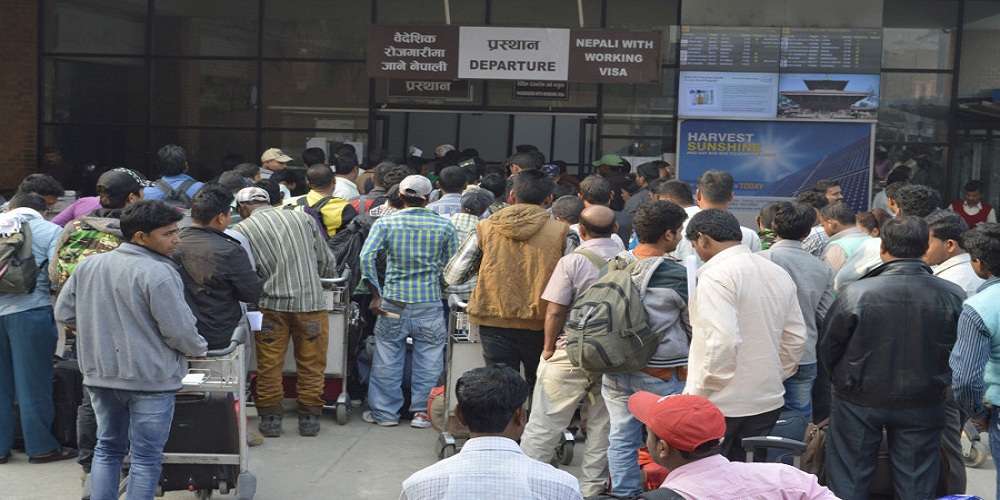
Nearly 1.9 million Nepali workers are currently employed in West Asia, with the Gulf region remaining the primary destination for foreign employment. Of the approximately 700,000 Nepalis leaving the country each year for work, about 65 percent head to Gulf countries. Reports indicate that at least one Nepali worker has been killed and several others injured in recent attacks, while many continue to live under constant fear amid ongoing strikes.
Nepal Rastra Bank data shows that around 40 percent of Nepal’s total remittances originate from Gulf countries. In the first seven months of the current fiscal year alone, Nepal received over Rs1.26 trillion in remittances, with a substantial portion coming from the region. Experts warn that prolonged instability could disrupt these inflows, with potential impacts on the broader economy.
Economists note that while remittance inflows may remain stable or even rise briefly during the early stages of a crisis, a prolonged conflict could lead to a decline within a few months. There are also concerns that fewer workers may migrate abroad, while some currently employed may return home, adding pressure on domestic employment. Analysts stress the need for the government to prepare for possible economic fallout and take timely measures to mitigate risks associated with declining remittances.