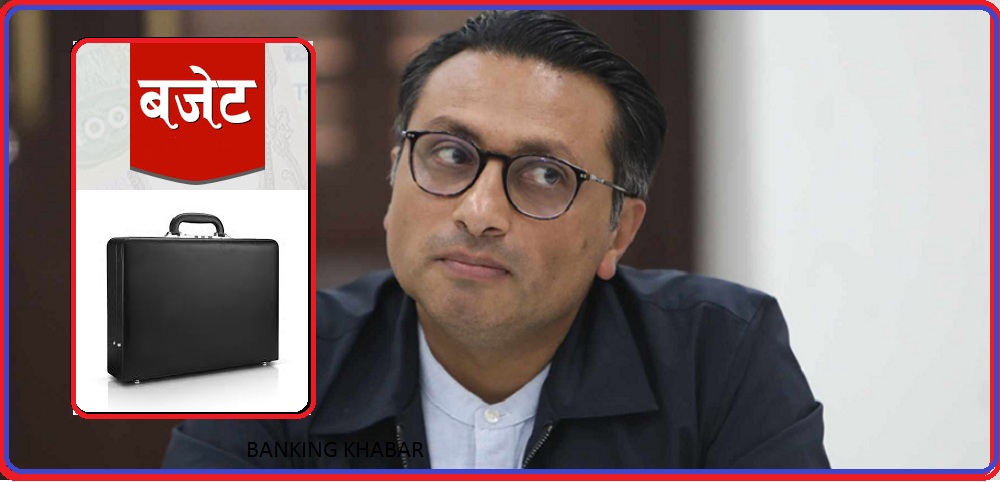
 Banking Khabar / Nepal’s Budget Debate Intensifies Amid Economic Pressure
The government has accelerated preparations for the Fiscal Year 2083/84 budget at a time when Nepal’s economy is facing mounting challenges. What was once considered a routine exercise of balancing revenue and expenditure has now evolved into a major political, economic, and administrative process that could shape the country’s economic direction for years to come.
As mandated by the Constitution, the federal government must present the annual budget in Parliament on Jestha 15. With the deadline approaching, high-level discussions are underway among the Ministry of Finance, the National Planning Commission, Nepal Rastra Bank, and various government ministries.
Pressure Mounts Over Limited Resources
Government ministries have already submitted their budget proposals to the Ministry of Finance, with most seeking larger allocations for upcoming programs and projects. However, the government is under growing pressure to limit spending due to weak revenue collection, declining capital expenditure, and rising public debt.
Economic experts say this year’s budget preparation is one of the most challenging in recent years. Revenue targets have repeatedly fallen short, imports have slowed, and economic activities remain sluggish, making resource management increasingly difficult.
This has sparked a major debate within policy circles: should Nepal continue presenting large and ambitious budgets, or focus instead on a realistic and implementable budget?
In previous years, governments introduced large-sized budgets but struggled to spend allocated funds effectively. As a result, criticism over weak implementation and low capital expenditure has intensified. Many economists now argue that the upcoming budget should reflect the country’s actual revenue and spending capacity rather than political ambition.
Private Sector Demands Investment-Friendly Policies
The Ministry of Finance is currently holding consultations with bankers, industrialists, tourism entrepreneurs, contractors, and private sector representatives to gather suggestions before finalizing the budget.
Business organizations including the Federation of Nepalese Chambers of Commerce and Industry and the Nepal Chamber of Commerce have urged the government to introduce tax relief measures, production-oriented policies, and reforms that encourage investment.
The banking sector has also pressed for policies aimed at credit expansion, improving the investment climate, managing non-performing loans, and maintaining stable interest rates.
Although banks currently possess sufficient loanable funds, private sector investment demand remains weak. Economists believe restoring business confidence through the budget will be crucial to reviving economic activity.
Government Likely to Prioritize Incomplete Projects
Construction companies and contractors are meanwhile demanding the clearance of pending government payments. Several major infrastructure projects have reportedly faced delays in payment, creating financial pressure on contractors.
In response, the government is expected to prioritize incomplete and ongoing projects rather than launching large numbers of new schemes.
There is also widespread discussion that the upcoming budget may include increased social security allowances, salary hikes for government employees, and programs focused on youth employment and entrepreneurship.
Coordination Between Fiscal and Monetary Policies in Focus
Coordination between the Ministry of Finance and Nepal Rastra Bank has become another major area of focus during budget preparation.
Policymakers are emphasizing the need for stronger alignment between fiscal policy and monetary policy, particularly on issues related to interest rates, credit flow, capital markets, real estate, and productive sectors.
The government is also reportedly preparing to prioritize agriculture, energy, information technology, tourism, and entrepreneurship in the new budget. Programs linked to startups, the digital economy, and self-employment are expected to receive greater attention as the government seeks to reduce youth migration abroad.
Foreign aid and external borrowing have also emerged as central issues during budget discussions, especially as Nepal’s dependence on loans continues to rise.
Rising Public Debt Raises Concerns
Nepal’s growing public debt has triggered increasing concern among economists and policy analysts. Critics argue that the government is becoming overly dependent on borrowing to sustain the national budget.
At the same time, recurrent expenditure continues to rise faster than development spending, raising questions about the long-term sustainability of government finances.
Political pressure has further complicated the budget-making process. Parties within the ruling coalition are lobbying to include their own programs and priorities, while lawmakers continue demanding constituency-based projects and allocations.
Call for a “Credible Budget”
Analysts argue that Nepal no longer needs a “popular budget” designed merely to attract public support. Instead, they stress the importance of a productive, credible, and implementation-focused budget capable of reviving economic confidence.
According to experts, the budget can only generate positive economic results if it successfully boosts private sector morale, creates employment opportunities, revitalizes agriculture and industries, and controls unnecessary government spending.
With economic recovery still fragile, this year’s budget is being viewed not simply as a government formality, but as a critical national strategy for rebuilding confidence and steering Nepal’s economy toward stability and growth.