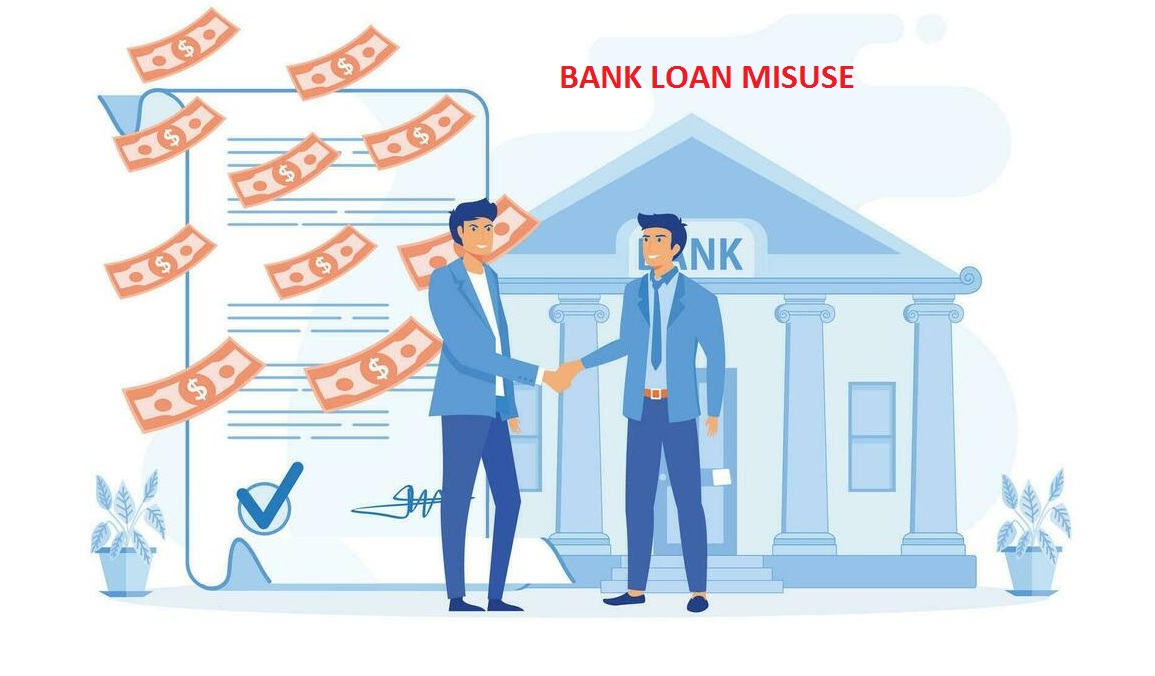
 Banking Khabar / In today’s economy, borrowing from banks and financial institutions has become a common practice among individuals, entrepreneurs, and businesses seeking to fulfill their ambitions and expand opportunities. Whether it is for launching a business, purchasing a home, investing in agriculture, acquiring machinery, or financing education, loans play a crucial role in driving economic growth and personal advancement.
However, financial experts warn that loans obtained without proper planning, realistic assessment of repayment capacity, and clear investment objectives can quickly transform from opportunities into burdens. More importantly, when borrowers utilize loan funds for purposes other than those approved by the lending institution, they may face allegations of loan misuse a practice that has become a growing concern within Nepal’s banking sector.
What Constitutes Loan Misuse?
Generally, loan misuse occurs when a borrower utilizes funds for purposes different from those specified in the loan agreement. Banks approve loans based on detailed assessments and specific intended uses. A business loan, for instance, may be sanctioned for expanding operations, purchasing equipment, increasing production capacity, or meeting working capital requirements.
When the borrower diverts those funds toward unrelated personal expenses, speculative investments, or unauthorized activities, financial institutions may classify such actions as misuse of credit facilities.
With the rise in non-performing loans and increasing financial sector risks in recent years, Nepali banks have intensified monitoring mechanisms to ensure that loan proceeds are being used appropriately. Financial institutions now conduct regular inspections, review financial records, and track the utilization of disbursed funds more closely than ever before.
Opportunities and Risks of Borrowing
Borrowing itself is not inherently problematic. When supported by sound planning, realistic cash flow projections, and productive investment opportunities, loans can become powerful tools for income generation and economic advancement.
Yet many borrowers obtain loans for personal consumption, lavish celebrations, vehicle purchases, overseas education, or lifestyle enhancements without thoroughly evaluating their long-term financial obligations. In such situations, even a minor disruption in income can create repayment difficulties and increase financial stress.
The Vulnerability of Small Businesses
The risks are particularly significant for small and medium-sized enterprises. Many entrepreneurs launch businesses with borrowed capital but fail to conduct adequate market research, assess competition, or seek professional guidance.
When business revenues fall short of expectations, loan repayments become difficult, often resulting in legal proceedings, collateral liquidation, and severe psychological pressure on borrowers and their families.
Business failures not only affect individual entrepreneurs but also contribute to broader financial instability within the banking system.
Rising Consumer Lending Raises Concerns
Consumer lending has expanded rapidly across Nepal in recent years. Loans for homes, automobiles, smartphones, travel packages, and various lifestyle products have become increasingly accessible.
While such financing enables immediate consumption, it also exposes households to financial vulnerability. Fluctuating interest rates, uncertain income sources, inflationary pressures, and economic slowdowns can significantly weaken borrowers’ repayment capacities.
As a result, many households find themselves burdened with debt obligations that exceed their financial capabilities.
Central Bank Calls for Responsible Borrowing
The central bank has repeatedly encouraged borrowers to utilize commercial loans responsibly and productively. According to banking regulators, business loans should primarily support business modernization, machinery acquisition, expansion projects, productivity enhancement, and the creation of new commercial opportunities.
“Commercial credit is not a luxury; it is a foundation for progress,” banking authorities emphasize. They stress that financial discipline, responsible investment decisions, and proper planning are essential for maintaining healthy personal and business finances.
Experts recommend that borrowers carefully assess business risks, prepare realistic financial projections, and fully understand repayment obligations before taking on debt.
Actions That May Lead to Loan Misuse Allegations
Several activities can trigger allegations of loan misuse by financial institutions.
One of the most common examples is using business loans for personal expenditures. If funds approved for industrial operations are spent on purchasing real estate, luxury goods, foreign travel, or other personal activities, banks may regard such actions as misuse.
Similarly, using a new loan from one bank to repay existing obligations at another institution—without disclosure or prior approval may be viewed as a violation of lending terms and financial discipline.
Investing approved loan funds in stock market speculation, real estate trading, or other high-risk ventures can also constitute misuse if such investments were not part of the original approved purpose. For example, utilizing an agricultural loan to purchase shares in listed companies may raise serious concerns during a bank’s monitoring process.
The submission of false information represents an even more severe form of misuse. Borrowers who provide fake invoices, forged financial statements, fabricated transactions, or misleading documentation to secure larger loans may face serious legal consequences. Such actions extend beyond regulatory violations and may constitute financial fraud.
Another major concern involves collateralized assets. Selling, transferring, or re-mortgaging property pledged as collateral without the bank’s consent can undermine the institution’s security interests and may be treated as a serious breach of loan agreements.
Likewise, using working capital loans for unrelated investments, diverting project finance toward unauthorized activities, or withdrawing funds through deceptive representations can all fall under the category of loan misuse.
Consequences Can Be Severe
If loan misuse is established, banks may initiate immediate recovery proceedings. The loan may be downgraded into a non-performing category, additional financing facilities may be suspended, and borrowers could face higher interest charges, penalties, and legal action.
In severe cases involving deception, fraud, or deliberate misconduct, provisions related to banking offenses and financial fraud may also apply.
The consequences extend beyond individual borrowers. Loan misuse weakens the banking sector, increases financial system risks, reduces credit availability for productive investments, and ultimately affects the broader economy.
Transparency Is the Best Protection
Financial experts agree that the most effective safeguard against allegations of loan misuse is transparency. Borrowers should utilize funds strictly according to approved purposes, maintain proper financial records, and communicate openly with their lenders regarding any significant changes in circumstances.
When loans are used responsibly, they can fuel business growth, enhance productivity, generate employment, and strengthen economic development. When misused, however, they can create financial hardship for borrowers, losses for banks, and instability for the entire economy.
As Nepal’s banking sector continues to strengthen oversight and risk management practices, responsible borrowing and disciplined financial behavior have become more important than ever.