Banking Khabar | Kathmandu | Jestha 5, 2082
The recent full-scale conflict between India and Pakistan—triggered by the April 22, 2025 terrorist attack in Pahalgam, Kashmir that claimed 26 lives—has escalated into one of the most intense military confrontations in South Asia since the 1999 Kargil War. Branded Operation Sindoor by India, the conflict saw both nations cross borders, deploy advanced weaponry, and strike critical infrastructure, including airbases.
Unlike the Kargil conflict, which was largely confined to border skirmishes, this latest war has introduced unprecedented military strategies involving drones, fighter jets, missiles, and surveillance aircraft—drawing global attention and heightening fears of a nuclear flashpoint.
A Tectonic Shift in Global Alliances
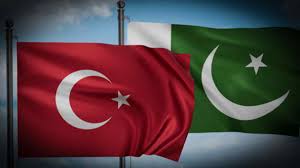
A notable geopolitical shift accompanied the conflict. China and Turkey openly backed Pakistan, while the U.S. and other Western powers remained neutral—failing to support India as expected. This diplomatic silence has delivered a significant psychological and strategic blow to New Delhi.
The U.S. eventually intervened diplomatically, reportedly after Indian airstrikes near Pakistan’s nuclear facilities raised global alarm. Former U.S. official Lisa Curtis wrote in Foreign Affairs that Washington, initially reluctant, stepped in fearing the catastrophic fallout of a nuclear escalation.
Strategic Setback for India
India, poised to become the world’s third-largest economy by 2030, now finds itself grappling with resource diversion toward defense at the expense of development. While India’s GDP stands at $4 trillion—ten times that of Pakistan’s $373 billion—the war has forced a strategic recalibration, especially with China gaining greater regional traction.
Military analysts argue India has been drawn into a costly conflict that delays its rise as a counterweight to China. While India sees Pakistan as a declining rival, the war shows Islamabad can still disrupt New Delhi’s regional ambitions.
China: The Silent Winner
While India battles on two fronts—militarily against Pakistan and diplomatically in a fractured alliance with the West—China emerges as the strategic beneficiary. The war provided China with a live testing ground for its advanced weaponry without engaging directly.
According to the Stockholm-based SIPRI, 81% of Pakistan’s military imports between 2020–2024 came from China. This includes J-10C fighter jets, PL-15 missiles, and drones—now battle-tested through Pakistani deployment.
Military experts believe Pakistan is in talks to purchase 40 fifth-generation stealth J-35A jets from China, a move expected to tip South Asia’s air power balance. Bangladesh, too, has shown interest in Chinese J-10C jets and has previously acquired submarines and other equipment from Beijing.
South Asia’s Volatile Future
The fragile ceasefire between India and Pakistan appears temporary. Indian Prime Minister Narendra Modi stated it was merely a pause, not a resolution. Many anticipate another, possibly more destructive, war if India seeks to reassert dominance.
Adding to India’s concerns is growing disillusionment with traditional allies. President Trump’s tweet claiming U.S. mediation in the ceasefire was met with public backlash in India, where officials denied any external involvement. This, coupled with Western media narratives suggesting India suffered losses, has dented Modi’s international image.
India’s disappointment with the Quad (U.S., Australia, Japan, India) and Indo-Pacific strategies—neither of which activated during the crisis—raises questions about the reliability of its strategic partnerships.
Regional Rivalries and Strategic Isolation
India’s strained relations with neighboring countries add further complexity. Tensions with Bangladesh, sparked by remarks from adviser Muhammad Yunus and concerns over Chinese military support, have fueled distrust. Meanwhile, Nepal’s diplomatic ties with India remain lukewarm, with no formal visit extended to Prime Minister KP Sharma Oli in over a year.
China’s influence continues to grow across South Asia. Its interest in constructing an airport in Bangladesh’s Lalmonirhat—just 70 km from India’s sensitive Siliguri Corridor—has alarmed Indian defense analysts, especially with potential involvement of Pakistani firms.
A Challenging Road Ahead for India
India’s ambition to become the unchallenged power in South Asia faces significant hurdles. Nuclear deterrence ensures Pakistan remains outside India’s sphere of dominance. Meanwhile, China’s strategic support to Pakistan and other regional players undermines India’s influence.
Without recalibrating its foreign policy, particularly its approach to China and the West, India risks further isolation. Its military and economic rise may stall if regional tensions continue to dominate its strategic agenda.
The South Asian power balance is shifting—and for now, China and Pakistan appear to be capitalizing on India’s moment of strategic overreach.