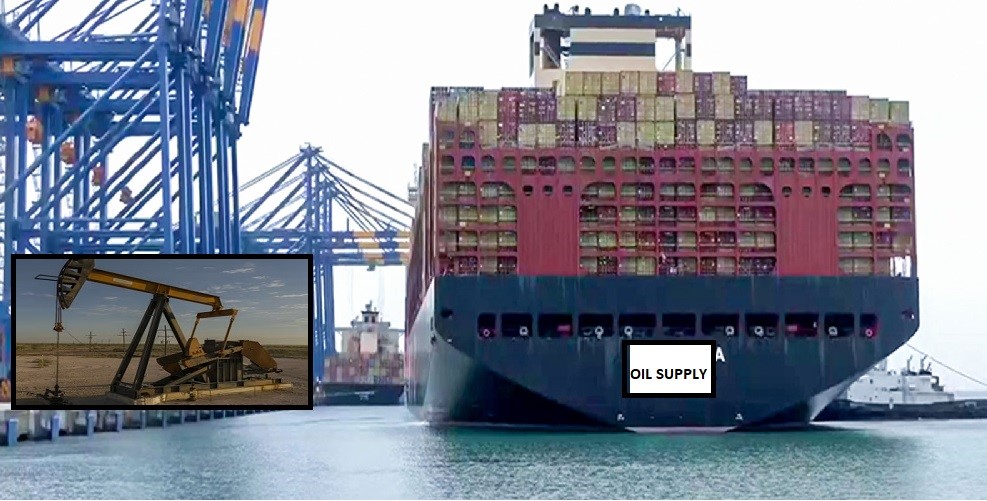
 Banking Khabar / Rising political and military tensions in the Middle East have driven a sharp increase in global crude oil prices, with both benchmark indices recording notable gains.
The price of Brent Crude surged by 5.24 percent on Monday, reaching $95.12 per barrel. Similarly, West Texas Intermediate (WTI) rose by 5.84 percent to trade at $88.75 per barrel.
Market volatility intensified after Donald Trump claimed on Sunday that the United States had seized a cargo vessel flying Iran’s flag. International media reported sharp fluctuations in oil markets from early Monday following the development.
Meanwhile, Iran had warned on Saturday that it could block ships passing through the Strait of Hormuz and target vessels entering the region. As one of the world’s most critical oil supply routes, any potential disruption in this waterway has significantly impacted global energy markets.
The ongoing tensions involving the United States, Israel, and Iran since February 28 have already contributed to sustained instability in the global energy sector. As part of diplomatic efforts, Trump stated that a delegation would be sent via Pakistan on Monday for talks with Iran, reportedly led by U.S. Vice President JD Vance.
However, Iranian state media have indicated that there are currently no plans to participate in negotiations, signaling that the situation could become even more complex.
Analysts warn that if tensions in the Middle East persist, disruptions to oil supply chains could push global prices even higher.