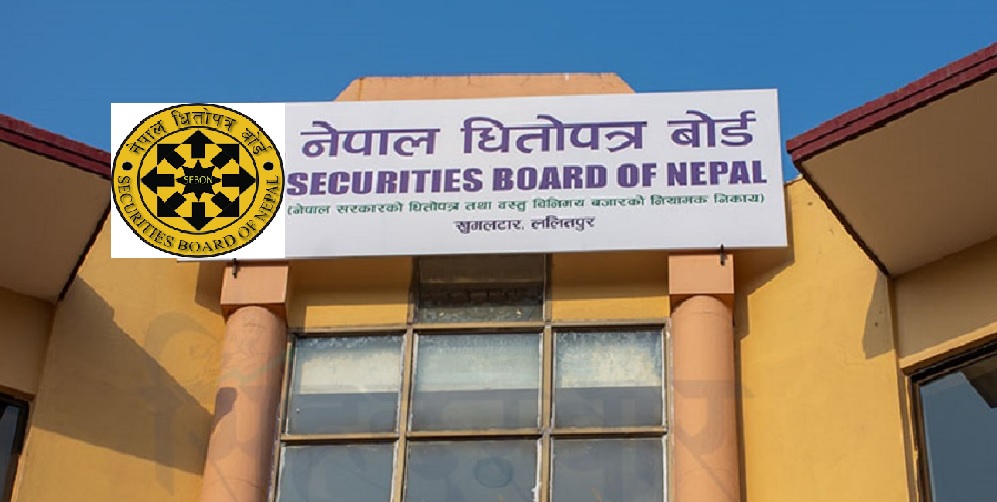
 Banking Khabar / A sweeping investigation by the Securities Board of Nepal has exposed what could be one of the largest stock market manipulation cases in the country centered on the misuse of billions of rupees from insurance companies.
According to the regulator, businessman Deepak Bhatt and his associates allegedly diverted nearly Rs. 4 billion from multiple insurers to artificially influence share prices. The findings surfaced during a parallel probe tied to money laundering concerns.
At the heart of the case is the misuse of public funds. Money collected from ordinary citizens both as insurance premiums and investments in publicly listed insurance companies was reportedly funnelled into coordinated stock trading schemes.
Investigators say Bhatt’s group leveraged companies in which they held significant stakes, channelling funds into carefully orchestrated trades. The probe reviewed transactions involving Nepal Reinsurance Company and Himalayan Reinsurance Company, along with several micro-insurance firms, investment companies, and business groups.
The scheme followed a calculated pattern: shares were acquired cheaply often on credit from individuals and private firms, their prices were then artificially inflated, and finally sold to insurance companies at much higher rates. In many cases, shares were credited to accounts without upfront payment, raising serious compliance and regulatory concerns.
The investigation names Bhatt and Sandeep Chachan as central figures. Both are accused of breaching securities laws related to market manipulation and fraudulent trading.
A wider network of institutions and individuals has also been implicated, including Himalayan Reinsurance Company Limited, Himalayan Capserv Limited, Nepal Micro Insurance Company, Himalayan Securities Banker Limited, and the HLI Large Cap Fund. Business figures such as Rohit Gupta and Shekhar Golchha were also cited in the report.
The board further found that Shubhi Agrawal, Himalayan Life Insurance Limited, Rishiraj Mor, and Raj bahadur Shah played roles in inflating the share price of Nepal Reinsurance.
The financial scale is significant. The group is estimated to have conducted around Rs. 3.8 billion in credit-based share transactions. Of that, Bhatt alone reportedly owes about Rs. 2.89 billion to Bhirkuti Stock Broking, while Shah owes nearly Rs. 897 million. Agrawal and Mor also face outstanding liabilities worth hundreds of millions.
The report highlights major procedural violations, including allowing trades without advance payment and crediting shares without proper settlement practices that directly undermine market integrity.
In response, the Securities Board has recommended further investigation and legal action by Nepal Police, while also urging insurance and anti-money laundering authorities to step in.
Described by officials as a “historic decision,” the board has already suspended Bhirkuti Stock Broking and forwarded the case for enforcement. Authorities say strict action could mark a turning point in improving transparency and discipline in Nepal’s capital market.
As calls for accountability grow, the case underscores deep weaknesses in financial oversight and raises urgent concerns about the safety of public investment in Nepal’s rapidly expanding stock market.