 Banking Khabar / Nepal Finance Minister Declares War on Insider Syndicates Dominating Capital Market
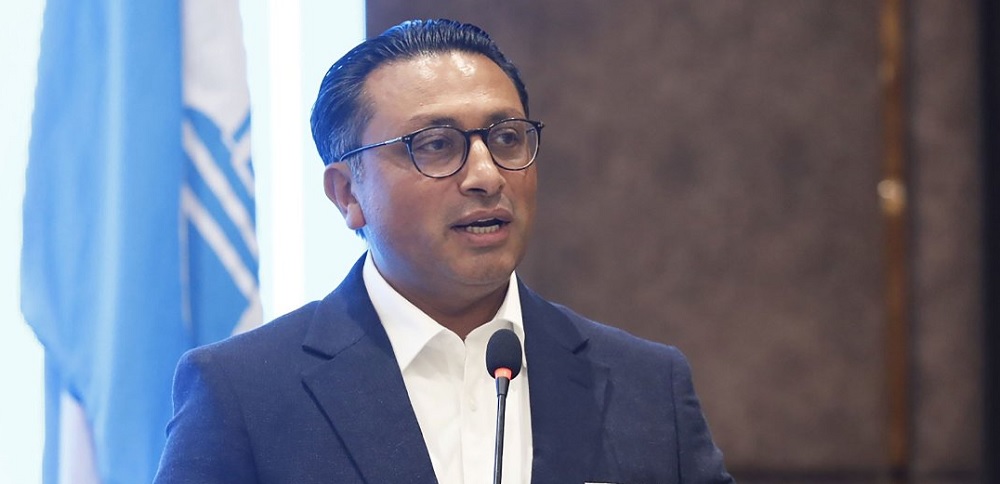
Nepal’s Finance Minister Dr. Swarnim Wagle has launched one of the strongest public attacks yet against what he calls the entrenched “old power structure” controlling the country’s capital market, bureaucracy, and revenue system.
Addressing a meeting of Parliament’s Finance Committee, Wagle announced that the long-delayed restructuring of the Nepal Stock Exchange (NEPSE) will finally move into implementation, signaling a major shake-up in the country’s financial sector.
But the minister’s message went far beyond technical reform.
In a fiery statement, Wagle accused a powerful network of insiders of using stock market manipulation and privileged information to build vast fortunes and then converting that wealth into political and administrative influence.
“Those who made enormous profits had effectively captured these institutions,” Wagle said before lawmakers.
The remarks are widely being viewed as a direct challenge to the alleged syndicate culture that critics say has dominated Nepal’s capital market institutions for years.
For decades, investors have complained that agencies tied to the stock market including NEPSE and the Securities Board of Nepal were heavily influenced by a small circle of politically connected groups. Allegations of insider trading, coordinated price manipulation, information leaks, and regulatory favouritism have repeatedly haunted the market.
Now, Wagle says the government is ready to dismantle that system.
‘Insider Traders Will No Longer Be Untouchable’
The finance minister confirmed that the government is preparing to implement the NEPSE restructuring study report and hinted that broader structural reforms will be unveiled through the upcoming national budget.
He also presented a list of 30 major reform initiatives introduced since taking office, describing the government’s agenda as centered on transparency, governance reform, and restoring investor confidence.
According to Wagle, key priorities include:
- Cracking down on revenue leakage
- Digitizing state systems
- Increasing administrative transparency
- Enforcing fiscal discipline
- Creating a more investment-friendly economy
He stressed that nationally important projects would no longer be abandoned simply because of funding shortages.
“Good projects will move forward through loans, grants, or revenue whatever it takes,” he said.
‘Gen Z Movement Saved the Country’
In one of the most politically charged moments of his speech, Wagle praised Nepal’s recent “Gen Z movement,” saying it had helped challenge the old power networks that had long operated unchecked.
“We must thank the Gen Z movement. Otherwise, people like these would have dragged the country into disaster,” he remarked.
The statement has sparked intense discussion in political and financial circles, with many interpreting it as more than a policy speech — but rather a declaration of political confrontation against Nepal’s long-standing economic elite.
Government Sets Rs 1.89 Trillion Budget Ceiling
Alongside the reform agenda, the government has fixed a budget ceiling of Rs 1.89 trillion for the upcoming fiscal year 2083/84.
Finance Ministry Secretary Ghanshyam Upadhyay said the next budget will focus on “results-oriented spending” at a time when Nepal is struggling with weak revenue collection and low development expenditure.
The government plans to:
- Prioritize unfinished projects over launching new ones
- Cut unnecessary state spending
- Channel resources toward productive sectors
Current fiscal data paints a difficult picture:
- Capital expenditure has reached only 26 percent
- Revenue collection stands at just 60 percent of the annual target
The Finance Ministry also disclosed that 39 government structures and more than 300 staff positions have already been eliminated as part of its reform drive.
With insider trading, institutional capture, and political favouritism now openly under attack from the country’s top economic official, Nepal’s financial establishment could be heading toward its most significant restructuring in years.