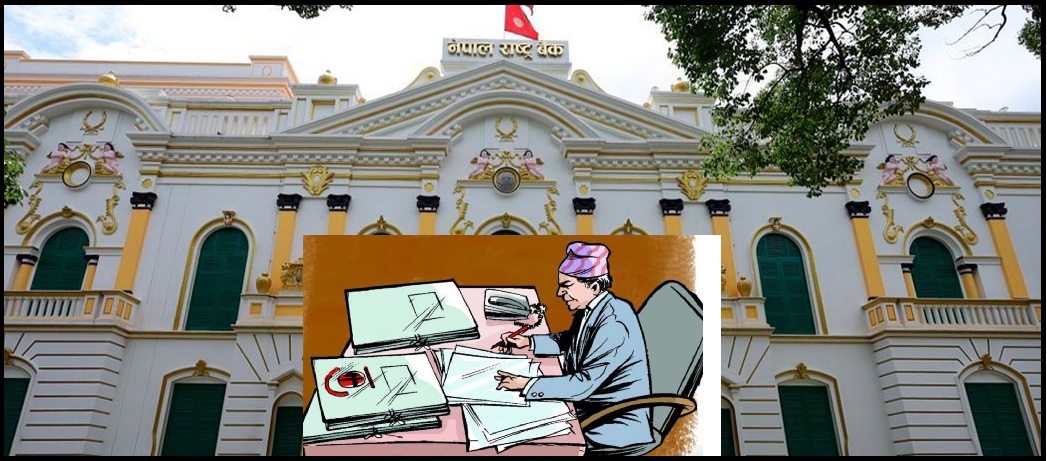
 Banking Khabar / Nepal’s Banks Trapped in a Collateral Crisis as Non-Banking Assets Near Rs 100 Billion
Nepal’s banking sector is quietly slipping deeper into a dangerous financial trap. What once appeared to be a temporary rise in loan defaults has now evolved into a growing mountain of non-banking assets seized properties, unsold collateral and distressed business holdings that banks never intended to own.
A recent study report shows that non-banking assets in Nepal’s banking sector have been increasing at an alarming pace, nearly doubling every year. Such assets stood at around Rs 18 billion by mid-July 2023. Within a year, the figure climbed to Rs 35 billion in 2024. By August 2025, it had surged to Rs 50 billion, and current estimates suggest the amount has now approached nearly Rs 90 billion.
The rapid rise is increasingly being viewed as a warning sign of deepening stress in Nepal’s economy.
When Banks Become Property Owners
In simple terms, non-banking assets are properties that banks acquire after borrowers fail to repay loans. Houses, land, hotels, factories, vehicles and commercial buildings pledged as collateral eventually end up under bank ownership when loan recovery efforts fail.
Banks are supposed to collect deposits and provide loans to productive sectors. But today, many banks are increasingly being forced into an unfamiliar business managing seized properties.
The growing stockpile of collateral assets signals not only rising financial risks within banks but also a broader slowdown in economic activity and weakening confidence in the private sector.
Auctions Without Buyers
In recent months, banks across Nepal have been publishing auction notices almost daily in an attempt to recover unpaid loans. Yet unlike previous years, there is now very little competition in collateral auctions.
In many cases, no buyers appear at all.
When repeated auctions fail, banks are ultimately compelled to transfer those properties into their own ownership, recording them as non-banking assets on their balance sheets.
Banking experts estimate that Nepal’s banks and financial institutions are now sitting on tens of billions of rupees worth of such assets. Although Nepal Rastra Bank does not regularly publish consolidated data on the issue, annual reports and financial statements from individual banks clearly show a sharp increase.
Economic Slowdown at the Core
The root of the problem lies in Nepal’s weakening economy.
Trade activity has slowed significantly. Industries are operating below capacity. The construction sector has nearly stalled, while consumer purchasing power continues to weaken.
As economic transactions decline, business income shrinks. Once businesses begin struggling to generate revenue, loan repayment problems emerge. This eventually leads to rising bad loans and forces banks to seize collateral.
Another major structural problem within Nepal’s banking system is its excessive dependence on collateral-based lending.
For years, many banks focused more on the strength of collateral than on the actual viability of businesses, market potential, productivity or cash flow. During the real estate boom, banks aggressively expanded lending under the assumption that land prices would continue rising indefinitely.
Now that the market has slowed, those same assets have become extremely difficult to sell.
Land once valued at millions of rupees is now struggling to attract buyers even at discounted prices.
Hotels and Real Estate Under Pressure
The crisis in Nepal’s hotel and real estate sectors has further intensified the problem.
Although tourism has partially recovered after the COVID-19 pandemic, many hotels have not returned to sustainable profitability. Numerous hotel entrepreneurs had borrowed heavily to build new properties during the tourism boom years. However, rising interest rates, weak demand and increasing operational costs have pushed many into financial distress.
Banks subsequently initiated auction procedures against hotels and commercial properties. But investors willing to purchase such distressed assets remain scarce.
As a result, many hotels and commercial buildings have ended up under bank ownership.
The construction sector is facing similar difficulties. Slow government capital expenditure has weakened cash flow for contractors who borrowed heavily from banks to finance projects.
Delayed government payments have left many unable to repay loans on time, contributing further to rising bad loans and non-banking assets.
Banks Caught in a “Collateral Trap”
Economists are increasingly describing Nepal’s banking system as being trapped in a “collateral crisis.”
When large volumes of capital become tied up in seized assets, banks lose their ability to provide fresh loans to productive sectors such as industry, agriculture, trade and energy.
This weakens private sector activity even further and risks creating a vicious economic cycle where slowing investment leads to weaker growth, more defaults and additional collateral seizures.
The rise in non-banking assets is also putting pressure on bank profitability.
Unlike traditional lending, seized properties do not generate regular income. Instead, banks must spend additional resources on maintenance, security, taxes, legal disputes and property management.
If property values continue falling, banks may eventually face direct losses on the actual value of those assets as well.
Central Bank Concern Growing
Nepal Rastra Bank has recently started tightening regulations surrounding collateral management.
The central bank has instructed banks not to transfer collateral into their ownership unnecessarily. Under current provisions, banks are allowed to acquire collateral assets only after at least three unsuccessful auction attempts.
However, with buyer demand collapsing across several sectors, regulatory tightening alone may not solve the problem.
Need for Structural Change
Experts argue that Nepal’s banking culture itself now requires fundamental reform.
Banks can no longer rely solely on collateral value while ignoring business fundamentals. Future lending, analysts say, must focus more on productivity, business capacity, entrepreneurship, market viability and long-term sustainability.
Greater investment in agriculture, information technology, energy, export-oriented industries and small enterprises could help revive economic momentum.
At the same time, the government’s role remains crucial.
Private sector confidence has weakened amid policy uncertainty, inconsistent regulations and slowing market demand. Many businesses are delaying expansion plans due to fears over economic instability.
If the government can improve the investment climate, accelerate capital expenditure and restore confidence within the private sector, pressure on the banking system may gradually ease.
A Warning Sign for Nepal’s Economy
Nepal’s banking sector today is not suffering from a shortage of liquidity. Instead, it faces a shortage of quality investment opportunities.
Banks still possess investable capital, but reliable and secure projects are increasingly limited. Meanwhile, old loans continue turning problematic.
This is why non-banking assets are rapidly swelling across the banking system.
If serious attention is not given to the issue now, banks may become even more cautious about issuing new loans in the future. That could further weaken entrepreneurship, trade and industrial activity across Nepal.
Ultimately, the consequences would extend far beyond banks affecting employment, economic growth and the living standards of ordinary citizens.
The growing pile of non-banking assets is therefore no longer just a banking issue. It has become one of the clearest indicators of the real health of Nepal’s economy.