 Banking Khabar / The government has announced a series of significant banking, financial sector, and investment-related reforms aimed at improving the investment climate, strengthening financial stability, and accelerating economic growth.
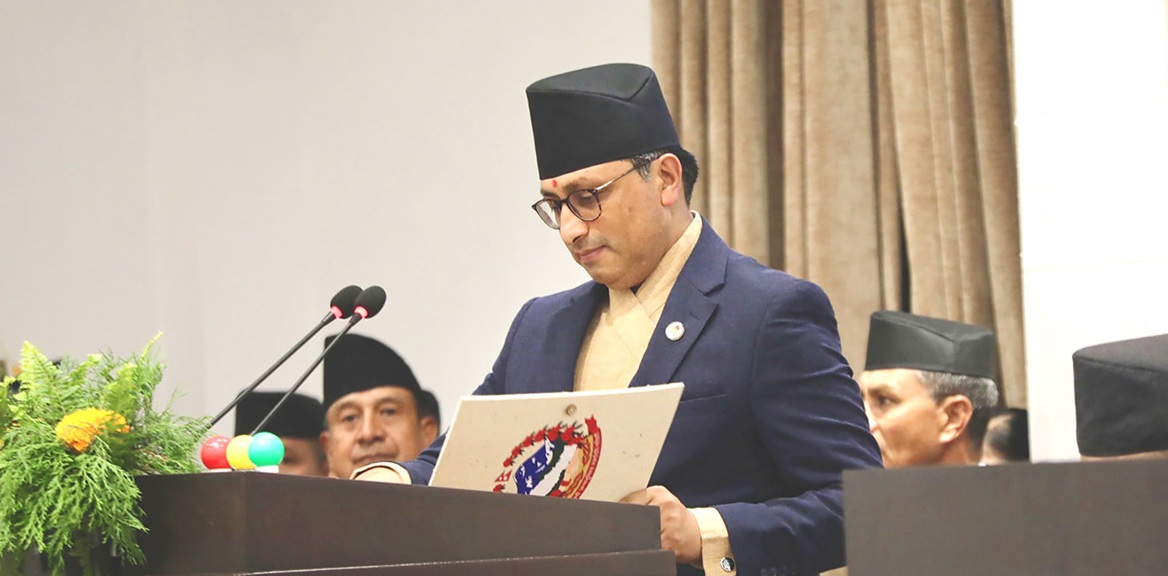
Presenting the budget for the upcoming fiscal year 2026/27, Finance Minister Dr. Swarnim Wagle unveiled several policy measures targeting capital markets, foreign investment, bad loan management, fintech development, and anti-money laundering efforts.
Capital Gains Tax to Remain Final Tax
In a major relief for investors, the government has declared that capital gains tax on share transactions will continue to be treated as the final tax liability from the next fiscal year.
Under the new arrangement, income generated from share trading and already subjected to capital gains tax will not be included in an individual’s taxable income for personal income tax calculations. Investors will not face any additional tax burden once the applicable capital gains tax has been paid.
The move is expected to provide greater certainty to investors and boost confidence in Nepal’s capital market.
National Asset Management Company to Address Bad Loans
To tackle the growing challenge of non-performing loans (NPLs) and rising non-banking assets within the banking sector, the government has announced plans to establish a National Asset Management Company by the end of mid-January 2027.
According to Finance Minister Wagle, the proposed institution will be equipped with special legal authority to effectively manage, restructure, and recover distressed assets held by banks and financial institutions.
The initiative is expected to help clean up bank balance sheets, improve credit flow, and strengthen overall financial sector stability.
Easier Foreign Investment Repatriation and Reduced Administrative Burdens
The government has also pledged to amend laws related to foreign investment and industrial administration to simplify investment procedures.
One of the most notable reforms allows foreign investors to repatriate their investments by simply notifying Nepal Rastra Bank, eliminating several procedural hurdles currently in place.
Likewise, amendments to the Industrial Enterprises Act will remove the requirement for prior approval from the Department of Industry for capacity expansion, ownership transfers, and capital increases. Investors will only need to provide notification to the authorities.
The government also plans to introduce legislation governing Limited Liability Partnerships (LLPs), which is expected to encourage investments through angel investors, venture capital funds, and private equity firms.
In addition, provisions allowing Nepali citizens to invest abroad will be further liberalized.
Fintech Marketplace Under Nepal Rastra Bank Supervision
As part of the government’s digital transformation agenda, a fintech marketplace will be established under the supervision of Nepal Rastra Bank.
The initiative aims to promote innovation in financial services and enhance digital monitoring and oversight within the banking sector.
The government has also announced measures to expand Nepal’s information technology industry by allowing investments abroad in IT services. It plans to introduce clear legal provisions supporting remote work arrangements, enabling Nepali professionals to work for foreign employers while residing in Nepal.
Furthermore, software procurement for government agencies will be streamlined through a centralized purchasing mechanism.
Commitment to Exit FATF Grey List
Finance Minister Wagle reaffirmed the government’s commitment to removing Nepal from the Financial Action Task Force (FATF) grey list as quickly as possible.
The government intends to strengthen anti-money laundering and counter-terrorist financing measures to meet international compliance standards and improve Nepal’s global financial credibility.
Opening Capital Markets to Non-Resident Nepalis
In another significant policy shift, the government announced plans to facilitate the participation of Non-Resident Nepalis (NRNs) in Nepal’s secondary securities market.
To support this objective, legal provisions governing foreign investment approvals, investment accounting, profit repatriation, and capital gains taxation will be revised.
The reform is expected to attract greater diaspora investment into Nepal’s capital markets and broaden the investor base.
A Comprehensive Reform Agenda
The newly announced measures represent one of the most comprehensive financial sector reform packages in recent years. By addressing bad loans, simplifying investment procedures, encouraging fintech innovation, strengthening anti-money laundering compliance, and opening new avenues for domestic and foreign investment, the government aims to create a more dynamic, transparent, and investment-friendly financial ecosystem.
The reforms are expected to play a crucial role in restoring investor confidence, strengthening the banking system, and supporting Nepal’s long-term economic growth ambitions.