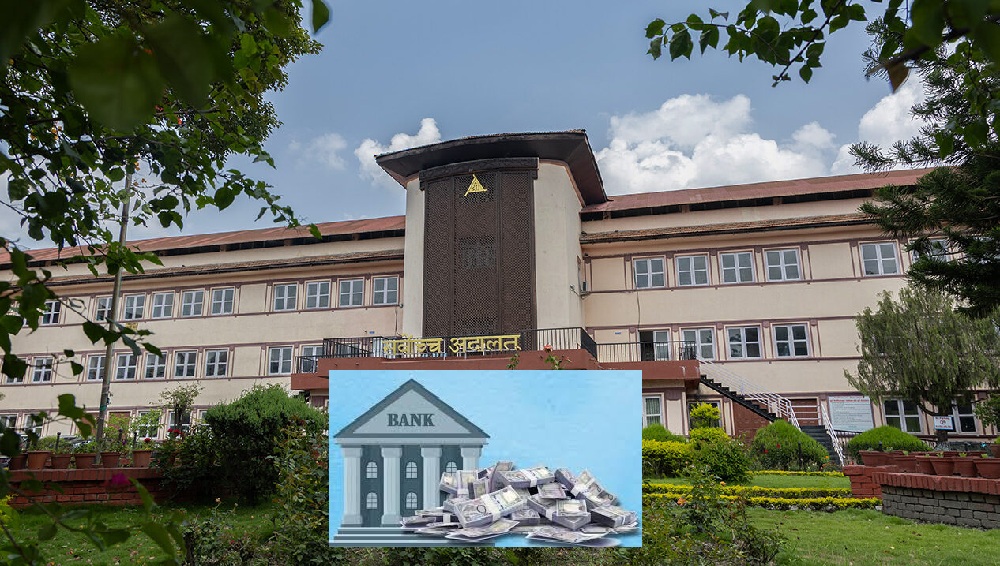
 Banking Khabar / A significant debate has emerged within Nepal’s banking sector following the publication of a recent Supreme Court verdict and a subsequent circular issued by the central bank. At the center of the controversy lies a crucial question: Can bank chief executive officers (CEOs) and directors who have faced any form of regulatory action from Nepal Rastra Bank (NRB) including warnings, reprimands, or monetary penalties continue to hold office?
The issue has gained momentum after a landmark interpretation of the law by the Supreme Court, which could reshape governance standards across Nepal’s banking industry.
Supreme Court Broadens Definition of Regulatory Action
A joint bench comprising Justices Dr. Nahakul Subedi and Nripdhwaj Niraula ruled that regulatory actions imposed by Nepal Rastra Bank cannot be divided into “minor” and “major” categories for the purpose of determining eligibility.
According to the Court, even actions such as a formal warning or reprimand constitute regulatory sanctions because they are imposed by the banking regulator. As a result, they must be treated as disciplinary actions under the law.
Interpreting provisions of the Bank and Financial Institutions Act (BAFIA), the Court concluded that any individual who has been subjected to regulatory action by the central bank within the past five years may be disqualified from serving as a bank director or CEO.
The ruling has introduced a new dimension to corporate governance in Nepal’s financial sector, where regulatory penalties were previously often viewed as routine administrative measures rather than potential grounds for disqualification.
Not an Immediate Removal Order
Importantly, the Court stopped short of ordering the immediate removal of affected executives and directors.
While dismissing the writ petition before it, the bench clarified that a person does not automatically lose their position merely because a regulatory action exists on record. The central bank must first complete the formal legal and administrative process required for removal.
In other words, the Court did not instruct banks to dismiss executives overnight. However, it did direct Nepal Rastra Bank to ensure strict implementation of legal provisions governing eligibility, notify concerned institutions, and conduct effective supervision.
This distinction is critical. Although the judgment does not instantly vacate positions, it significantly weakens the legal basis for individuals with recent regulatory sanctions to continue serving indefinitely.
From Legal Debate to Enforcement Stage
Following the release of the full text of the judgment, Nepal Rastra Bank informed banks and financial institutions about the ruling and indicated that implementation procedures had begun.
As a result, what was previously a legal and academic debate has now entered the enforcement phase.
Should the central bank proceed in accordance with the Court’s interpretation, the eligibility of several CEOs and directors who have received warnings, reprimands, or other sanctions within the last five years may come under review.
In recent years, NRB has publicly disclosed disciplinary actions against CEOs, directors, and financial institutions. For instance, in the Nepali month of Falgun 2082, the regulator announced warnings and financial penalties against executives and directors of several commercial banks.
However, the central bank has not released any official list identifying individuals who could be removed under the Court’s interpretation. Consequently, it would be legally premature to conclude that any particular CEO or director is certain to lose their position.
Possible Legal Challenges Ahead
The judgment is also expected to trigger further legal proceedings.
Reports suggest that some banking executives are exploring options for review petitions or other legal remedies. Individual cases may ultimately depend on the nature of the regulatory action imposed, the date of the sanction, and the specific legal circumstances involved.
Nonetheless, the ruling has undeniably strengthened the legal foundation for holding bank leaders accountable for regulatory violations.
For many observers, the verdict represents one of the most consequential judicial interventions in Nepal’s banking governance framework in recent years.
Governance Standards Under the Spotlight
Beyond its immediate legal implications, the case has reignited a broader discussion about corporate governance in Nepal’s banking industry.
Over the past several years, Nepal Rastra Bank has increased enforcement actions against banks and financial institutions for violations ranging from non-compliance with directives to weaknesses in risk management, loan classification errors, and other regulatory shortcomings.
While this reflects greater regulatory vigilance, frequent disciplinary actions also raise concerns about underlying governance weaknesses within financial institutions.
Repeated violations of similar nature suggest that governance mechanisms may not yet be functioning as effectively as intended.
At the heart of this debate are bank CEOs and boards of directors—the two pillars responsible for ensuring sound governance.
Critics argue that in some Nepali banks, boards have moved beyond their strategic oversight role and become directly involved in day-to-day management decisions. Such practices can blur the distinction between governance and management, creating accountability challenges and weakening institutional controls.
Under international best practices, boards are expected to focus on strategy, oversight, risk governance, and accountability, while executive management is entrusted with the institution’s daily operations.
When these roles overlap or conflict, governance standards can suffer.
A Turning Point for Nepal’s Banking Sector
The Supreme Court’s latest precedent may ultimately prove to be a watershed moment for Nepal’s banking industry.
By affirming that even seemingly minor regulatory sanctions can carry serious consequences for leadership eligibility, the Court has sent a strong message about accountability at the highest levels of financial institutions.
Whether the ruling leads to the removal of executives, legal appeals, or regulatory reforms remains to be seen. What is already clear, however, is that governance, compliance, and regulatory integrity have become central issues in Nepal’s banking landscape.
The coming months will reveal how aggressively Nepal Rastra Bank enforces the Court’s interpretation—and whether Nepal’s banks are prepared to meet a higher standard of corporate governance.