 Banking Khabar / Economic and financial experts have emphasized that artificial intelligence (AI) and digitalization will play a vital role in Nepal’s economic development, increasing production, expanding financial access, and improving the effectiveness of public service delivery.
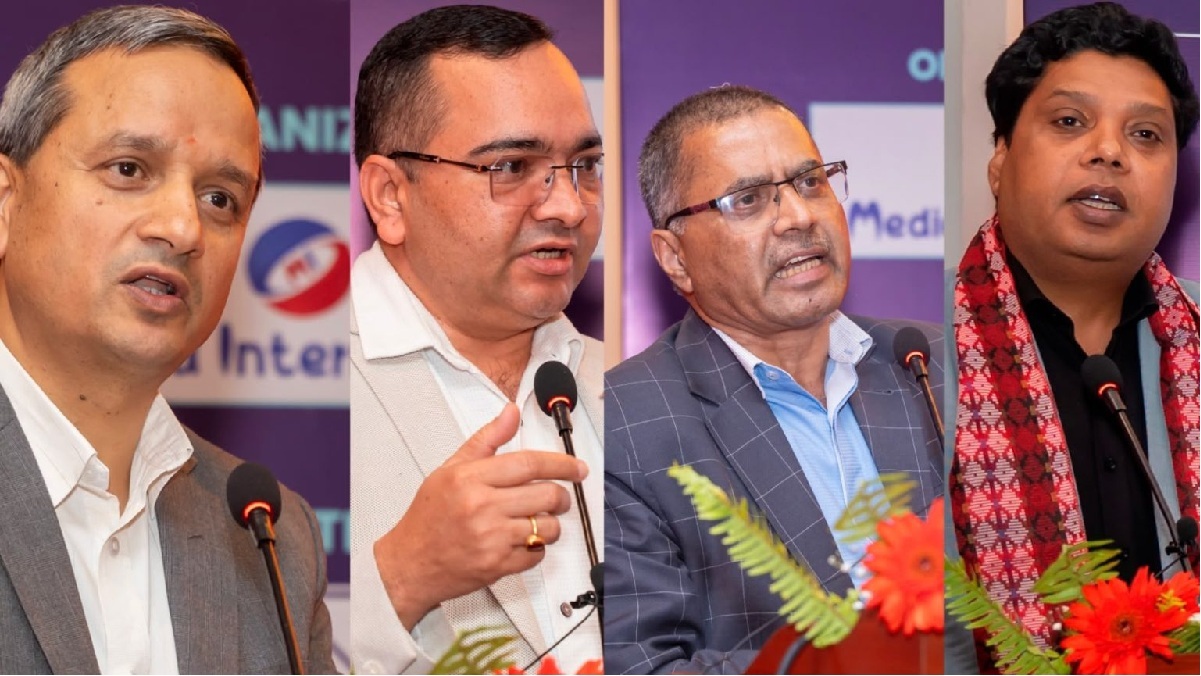
Speaking at the ‘AI and Digitalization Summit 2026’ organized by Media International, Vice Chairman of the National Planning Commission Dr. Gunakar Bhatta said that Nepal needs to increase investment in artificial intelligence (AI) and digitalization to achieve economic transformation, boost production, and ensure sustainable development.
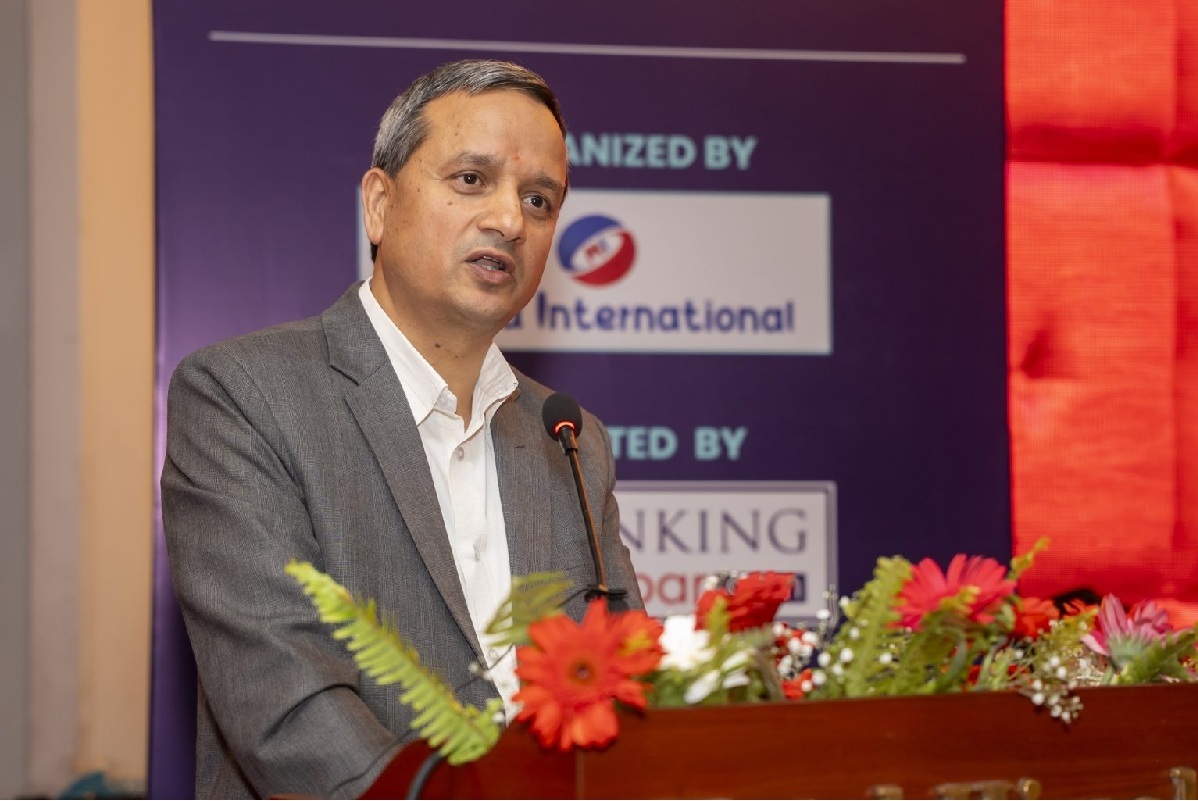 Addressing the summit, Dr. Bhatta stated that Nepal is currently moving from a low-income economy toward a path of higher economic growth. He informed that the government has set a target of achieving 7 percent economic growth within the next five years. According to him, traditional development models alone will not be sufficient to achieve this target, and Nepal must adopt technology-driven development strategies.
He said that effective use of AI and digital technologies can help increase production and productivity, make public services more accessible, faster, and transparent, and enhance the competitiveness of economic activities. He added that the application of AI in sectors such as agriculture, industry, banking, education, healthcare, and public services could bring significant transformation.
“The global economy is currently advancing on the foundation of digital technology and innovation. Nepal must maximize the use of technology to accelerate economic development and remain competitive in the global market,” he said.
Dr. Bhatta stressed that AI and digitalization should not be viewed merely as technological issues but as strategic sectors linked with economic growth, job creation, innovation promotion, and overall national prosperity. He highlighted the need to prioritize the expansion of digital infrastructure, increased investment in research and innovation, development of skilled human resources, and policy reforms to build a digital economy.
According to him, the use of AI can bring qualitative improvements in business operations, production management, financial services, agricultural productivity, and government service delivery. He expressed confidence that AI adoption would help reduce costs, improve efficiency, and expand citizens’ access to services.
The summit organized by Media International was attended by policymakers, representatives from the banking and financial sectors, technology experts, private sector leaders, academics, and stakeholders from various fields.
During the event, discussions were held on Nepal’s digital future, the potential of AI, cybersecurity, digital financial literacy, and various dimensions of technology-driven economic development. Speakers highlighted that Nepal could achieve significant progress in economic growth, service delivery, and good governance by accelerating digital transformation. They emphasized that AI and digital technologies should be promoted as key foundations for the country’s future development.
New Generation Should Contribute to the Economy Through AI and Digital Systems: Revati Nepal
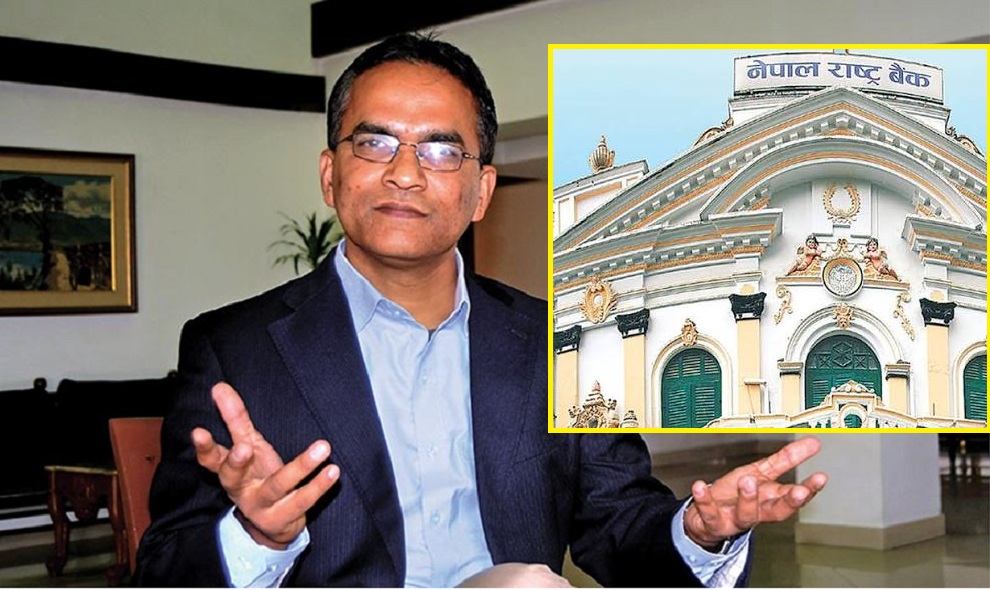
 Speaking at the program, Executive Director of Nepal Rastra Bank Revati Nepal said that Nepal’s economy can be strengthened and made more competitive through the effective use of digital technologies and artificial intelligence (AI). He emphasized that the new generation, in particular, should maximize the use of AI and digital systems to contribute to the transformation of the economic and financial sectors.
According to him, the global financial sector is rapidly moving toward digital transformation, and Nepal should embrace this shift as an opportunity. He stated that the use of digital banking, online financial services, data analytics, and AI-based systems would play a crucial role in improving the quality, accessibility, and effectiveness of financial services.
Executive Director Nepal noted that financial digitalization has moved beyond the basic stage of technology adoption and is now entering an era of AI-driven systems. He said that banks and financial institutions have started increasing the use of AI in service delivery, risk management, customer analysis, and decision-making processes, and Nepal should also advance this systematically.
He highlighted that the banking system of the future will be based on data and technology, and emphasized the need to institutionalize “data-driven decision-making” systems based on facts and analysis. As AI can analyze large volumes of information quickly, securely, and efficiently, he said it can simplify processes ranging from policymaking to service delivery.
Nepal said that Nepal can integrate and manage various information and data available within banks through AI platforms and smart digital systems. This would help employees access necessary information quickly, understand customer needs better, and improve institutional efficiency.
According to him, the use of AI enables banks and financial institutions to analyze customer behavior, transaction patterns, and financial conditions more effectively. Based on such analysis, institutions can assess customers’ risk levels, financial discipline, and potential requirements, thereby making service delivery more efficient.
“Through AI, banks and financial institutions can conduct customer rating, risk assessment, and service requirement analysis in a more scientific manner,” he said.
He also stated that AI and digital technologies would have an important role in further strengthening financial inclusion. He expressed confidence that connecting citizens in remote and rural areas with financial services through digital platforms would expand economic activities and increase financial access.
Executive Director Nepal stressed the need to give special attention to cybersecurity, data privacy, and digital literacy alongside technological advancement. As the use of AI and digital systems increases, he said Nepal needs a capable regulatory framework and skilled human resources to manage potential risks.
In conclusion, he emphasized that AI, digitalization, and data-based decision-making systems should be prioritized to make Nepal’s banking and financial sector future-oriented, technology-friendly, and competitive. According to him, these initiatives will contribute significantly to improving service delivery, reducing costs, enhancing customer satisfaction, and modernizing the overall economy.
The Future of Banking Depends on Technology: Manoj Gyawali
 Speaking at the program, Nabil Bank CEO and Executive Member of the Nepal Bankers’ Association Manoj Gyawali said that digitalization and artificial intelligence (AI) should not be understood as the same thing, as the roles and applications of these two technologies are different. He stated that while digitalization has expanded access to banking and financial services and made service delivery easier, AI will make these services more intelligent, analytical, and automated.
According to him, Nepal has achieved significant progress in the development of digital payment systems in recent years. He said that the expansion of mobile banking, QR codes, digital wallets, online payments, and interbank digital transactions has completely transformed the nature of financial transactions.
“We have already made significant progress in digital payments. Today, most financial transactions are being carried out through mobile and digital platforms,” he said.
CEO Gyawali stated that the banking sector is rapidly becoming technology-oriented, and the necessity of customers’ physical presence at bank branches in the future has become uncertain. According to him, in the coming days, customers will increasingly complete most banking activities through digital platforms rather than visiting bank branches.
“It is difficult to predict whether customers will come to banks in the future or not. Where services are accessed, how they are accessed, and how they are delivered will largely depend on digitalization and AI,” he said.
He said that banking services are gradually transforming from a branch-centered system to a digital platform-centered system. Gyawali highlighted that one of the biggest achievements of digitalization has been in information and data management. He noted that most records, details, and information that were previously maintained in paper form are now being securely stored through digital systems.
He added that digitalization has made it possible to securely manage information ranging from customers’ personal details to financial transaction records on digital platforms.
According to him, banking services will become more modern and convenient in the coming days. He said that activities such as opening accounts, transferring funds, paying bills, and accessing various financial services through mobile applications have already become common. With the increasing use of biometric and facial recognition technologies in the future, customers may be able to operate accounts, make payments, and access banking services simply through facial or identity-based authentication, he said.
CEO Gyawali said that the use of artificial intelligence would make decision-making processes in the banking sector more effective and faster. He stated that areas such as loan approval, credit assessment, risk analysis, and evaluation of customers’ financial conditions could be automated through AI-based systems.
He said this would create an environment where customers can receive financial services more quickly, transparently, and conveniently.
Highlighting that the future of banking will be technology-driven, he said digitalization and AI should not be viewed merely as options but as necessities. He warned that banks and financial institutions that fail to transform themselves according to changing technologies and customer expectations will face challenges in remaining competitive.
During the program, he emphasized that Nepal should now connect its achievements in digital banking and digital payments with AI, data analytics, and automated financial services. He concluded that this integration would help make the banking sector more modern, efficient, and customer-friendly while significantly contributing to improving the efficiency and reliability of the overall financial system.
Need to Link Rural Infrastructure with Production and the Economy: Chairman Yadav
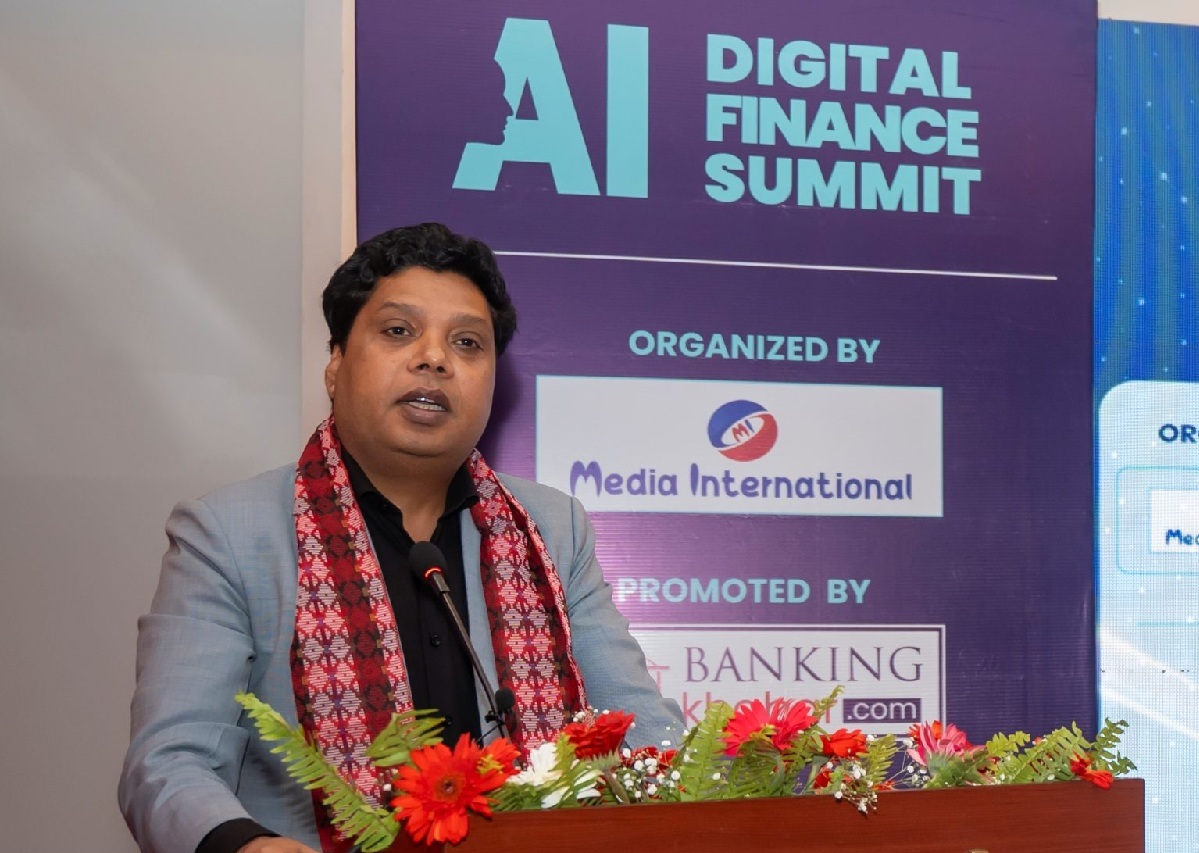 Speaking at the program, Chairman of the Microfinance Bankers’ Association Ram Bahadur Yadav said that although access to roads, electricity, internet, and other basic infrastructure has expanded significantly in Nepal’s rural areas in recent years, the country has not been able to achieve the expected economic benefits from these developments.
He said infrastructure development should not be considered the ultimate goal of development itself. According to him, real economic prosperity can only be achieved when infrastructure is connected with production, entrepreneurship, employment generation, and income opportunities.
According to Yadav, roads have reached villages across the country, electricity services have expanded to most settlements, and internet access is also continuously increasing. However, he said that despite such major investments and development achievements, these infrastructures have not yet been effectively utilized as a means to expand economic activities and increase local production.
“We have made significant progress in building physical infrastructure, but these infrastructures have not produced the expected results in improving the living standards of rural people and strengthening the economy,” he said.
Chairman Yadav stated that millions of small and micro entrepreneurs are actively engaged in various sectors in Nepal and represent an important foundation of the national economy, but they have not received adequate attention from the state.
He said that numerous enterprises related to agriculture, livestock farming, handicrafts, cottage industries, food processing, tourism, and service sectors are operating in rural areas. However, the necessary support, investment, market access, and technology required for expanding these businesses remain limited.
He emphasized that micro entrepreneurship should not be viewed merely as a means of livelihood but as a major force capable of driving the national economy. He said that small rural entrepreneurs are utilizing local resources to produce goods and services, creating employment opportunities and contributing to the growth of local economies.
However, he expressed concern that the full potential of these entrepreneurs has not been realized due to a lack of adequate encouragement and protection.
Yadav said that whenever he visits rural areas, he sees immense potential and feels encouraged by the dedication and enthusiasm of local entrepreneurs. However, he noted that many entrepreneurs are forced to become frustrated because they do not receive fair returns for their hard work.
“There are enormous opportunities in rural areas, there are people willing to engage in entrepreneurship, and there is production capacity, but there is a lack of an effective system to connect these efforts with markets and the economy,” he said.
He stated that the government should not limit rural development only to infrastructure construction but should prioritize production-oriented programs. According to him, a clear strategy is needed for marketing, branding, value addition, and export promotion of locally produced goods.
He also emphasized the need to expand financial access, develop skills, provide entrepreneurship management training, and encourage the use of digital technologies.
Chairman Yadav expressed concern over the current situation where many citizens are compelled to seek opportunities abroad. According to him, despite having sufficient potential for employment and entrepreneurship within Nepal, young people are increasingly attracted to foreign employment due to the failure to utilize these opportunities in a systematic manner.
He expressed confidence that if small and micro enterprises in rural areas receive the necessary support and opportunities, a large number of young people can find employment and income-generating opportunities within the country.
He stressed the need for the government to place micro entrepreneurship at the center of economic policy. He said that rural economies can become more dynamic by providing financial and technical support to enterprises related to agriculture, cottage industries, local production, and service sectors.
Highlighting the important role played by microfinance institutions in expanding financial access among rural communities, he said cooperation among financial institutions, the government, and the private sector is essential.
Yadav described the expansion of digital technology and internet access as a major opportunity for the rural economy. He noted that many rural entrepreneurs have started promoting their products through social media and digital platforms, and emphasized the need for special programs to integrate rural areas into the digital economy.
He expressed confidence that such initiatives would help connect local products with national and international markets.
Digital Technology Expanding Even in Rural Areas: Senior Agricultural Economist Laxman Gurung
 Senior agricultural economist and environmentalist Laxman Gurung has said that the use of digital technology and artificial intelligence (AI) has been increasing even in rural areas in recent times. According to him, farmers at the grassroots level have started gaining significant benefits by using digital platforms for agricultural production, market management, and access to information. He said this has created new opportunities in the agriculture sector while contributing to increased productivity and income.
Gurung stated that digital technology and AI can not only reduce the gap between rural and urban areas but also play an important role in taking Nepal’s agricultural products to international markets. He said farmers can promote and distribute their products through online platforms, digital marketplaces, and modern technologies, which can also support export promotion.
He noted that digital transformation in the global agriculture sector is advancing rapidly and Nepal should take advantage of this opportunity. According to him, the use of AI can make production planning, pest and disease management, weather forecasting, market analysis, and supply chain management more effective.
Emphasizing the need to prioritize information and communication infrastructure for the sustainable development of the rural economy, Gurung said the government should increase investment, particularly in expanding quality internet services in rural areas.
He expressed the belief that easier and more affordable internet access would enable farmers to connect with modern technologies, receive market information instantly, and take their products to wider markets.
He also highlighted the need for cooperation among the government, private sector, and development partners to enhance farmers’ digital literacy and create a technology-friendly agricultural environment.
Gurung concluded that the effective use of digitalization and AI can strengthen the rural economy while making significant contributions to the modernization of the agriculture sector and overall economic development.