 Banking Khabar / A serious question is now emerging in Nepal’s economic landscape: How far will the money laundering investigation go?
The recent investigation linked with former finance ministers and political leadership has brought the issue into sharper focus. Money laundering is no longer viewed merely as a search for illegally acquired funds. It has become a broader issue connected with political influence, business networks, regulatory decisions, the banking system, and the credibility of state institutions.
From the Finance Ministry to the Investigation Spotlight
The finance minister is one of the most influential figures in the country’s economic governance. Decisions related to the national budget, taxation policies, financial sector reforms, public enterprises, investment climate, and private sector relations all fall within the ministry’s sphere of influence.
Therefore, when a former finance minister comes under the scrutiny of a money laundering investigation, it naturally raises wider questions, whether policy decisions and personal interests were ever connected.
However, being investigated and being proven guilty are entirely different matters. In a democratic system, allegations must be tested through evidence and due legal processes.
Why a Finance Minister’s Link Creates Greater Concern?
A finance minister is not merely responsible for preparing the budget. The position plays a central role in shaping economic policies, investment conditions, taxation systems, financial reforms, and coordination with the private sector.
That is why allegations involving a former finance minister do not remain limited to an individual. They create broader discussions about the credibility of the country’s economic governance system.
When questions arise regarding the financial activities or decision-making process of individuals who have held key policy positions, the issue becomes highly sensitive because confidence is the greatest asset of any economy.
Why the Banking Sector Is Becoming More Cautious?
As money laundering investigations expand, the banking sector has emerged as one of the most sensitive areas under discussion.
The reason is simple: banks are the primary gateway for financial transactions. The source of wealth, large-scale transactions, unusual investments, and suspicious financial activities are first monitored through the banking system.
A growing concern among bank directors and senior management is whether past decisions could come under renewed scrutiny.
Areas such as large-scale lending, transactions with business groups, collateral valuation, investment decisions, and customer identification systems may face increased monitoring in the future.
The Central Bank Under the Shadow of Money Laundering Concerns
The money laundering debate, which initially centered around political leadership and business groups, has gradually moved toward discussions about Nepal’s financial regulatory framework and the role of the central bank.
Following public discussions surrounding decisions and appointments made during the tenure of former Finance Minister Bishnu Paudel, questions have also emerged regarding institutional relationships, regulatory responsibilities, and the independence of financial institutions.
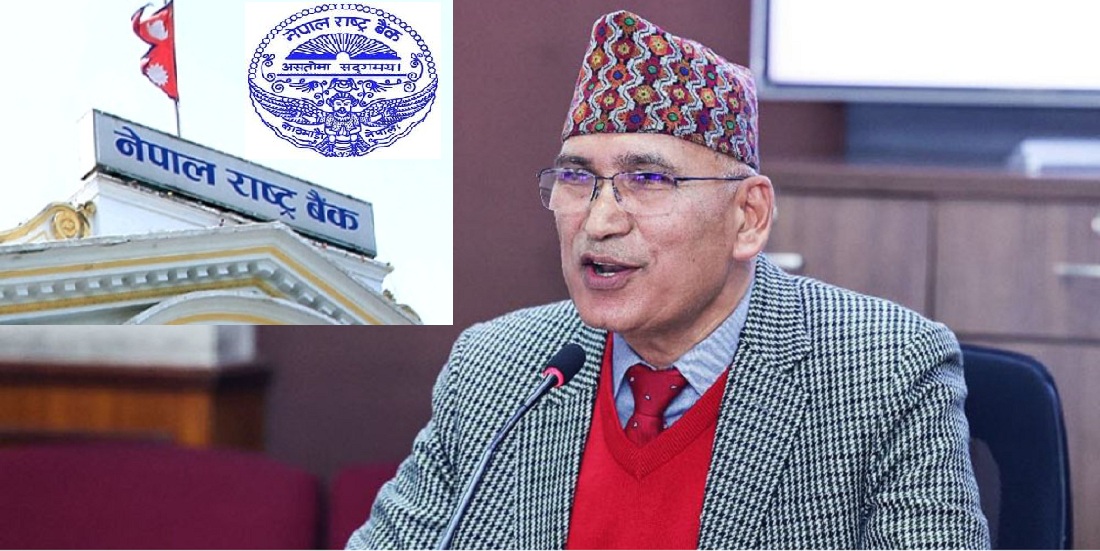
Some discussions have focused on the fact that the leadership of Nepal Rastra Bank was selected during Paudel’s tenure as finance minister, raising speculation about whether the issue could have implications for the central bank.
However, an important distinction must be maintained: the appointment of an individual to a position does not, by itself, prove wrongdoing or irregularity.
Any connection with the central bank must be examined through the lens of institutional decisions, regulatory effectiveness, and transparency within the financial system—not merely political association.
Why Nepal Rastra Bank Becomes Relevant in Money Laundering Discussions?
Nepal Rastra Bank is the country’s primary banking regulator. It is responsible for supervising banks and financial institutions, ensuring risk management practices, enforcing customer identification systems, monitoring suspicious transactions, and maintaining financial discipline.
Therefore, whenever concerns related to money laundering arise, the role of the central bank naturally comes under discussion.
Money laundering investigations generally do not focus only on where funds originated. They also examine how money moved, which institutions processed transactions, what approval mechanisms were followed, and whether regulatory weaknesses contributed to the situation.
If a bank or financial institution has processed large suspicious transactions, failed to properly monitor risks, or shown weaknesses in customer due diligence, the regulatory dimension may also come under review.
However, this does not automatically mean that the central bank or its leadership is responsible. The key issue is whether the financial system’s safeguards were effective and whether regulatory mechanisms functioned properly.
A Balancing Challenge for the Central Bank
The current situation presents a significant institutional challenge for Nepal Rastra Bank.
On one hand, strict measures are necessary to strengthen anti-money laundering controls and meet international standards. On the other hand, the banking sector must be protected from unnecessary fear and uncertainty that could affect normal financial activities.
International financial standards place strong emphasis on the effectiveness of regulatory institutions. Therefore, the role of Nepal Rastra Bank is not limited to issuing directives to banks—it is also responsible for ensuring that the entire financial system remains transparent, secure, and credible.
The Real Question: Not Whether the Investigation Reaches the Central Bank, But How?
The key question now is not simply whether money laundering investigations will reach the central bank. The more important question is from what perspective the central bank’s role will be examined.
If the focus is on institutional weaknesses, regulatory effectiveness, and financial transparency, such issues may naturally become part of the investigation process.
But conclusions cannot be drawn solely based on appointments, relationships, or political connections.
The latest money laundering debate has made one thing clear: Nepal’s financial system is now under scrutiny not only for how banks conduct transactions, but also for how effectively those institutions are regulated.
For Nepal Rastra Bank, the real test ahead will be whether it can continue to maintain a financial system that is transparent, accountable, and trusted by both domestic and international stakeholders.