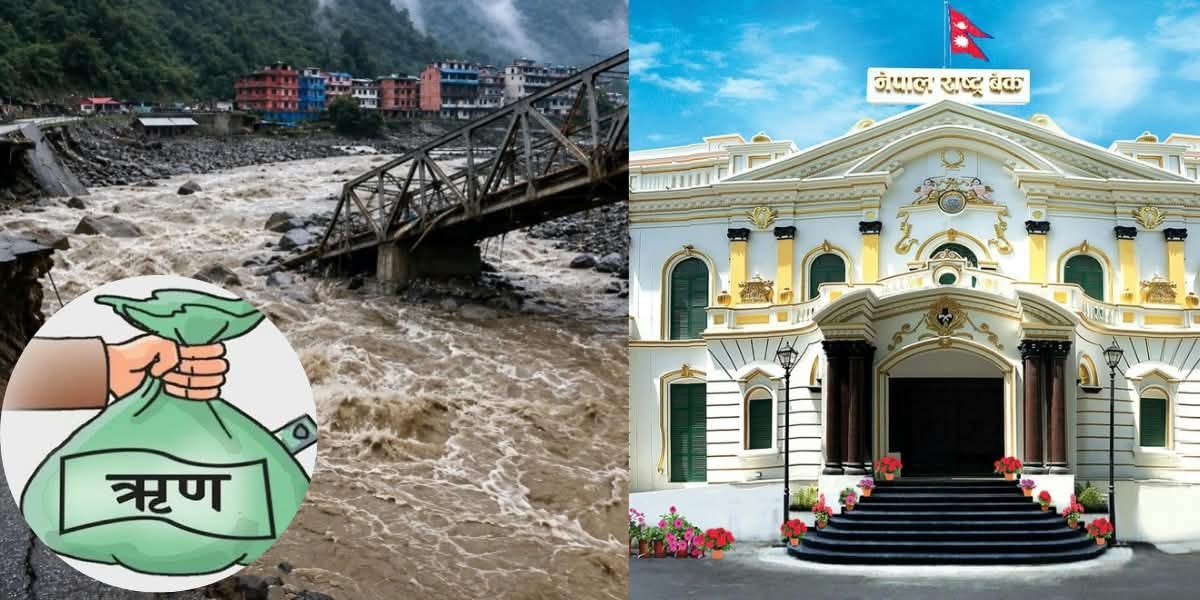
Banking Khabar / Nepal Rastra Bank (NRB) has introduced a provision allowing banks and financial institutions to extend the deadline for repayment of principal and interest instalments to facilitate loan repayment for businesses and borrowers affected by floods. The central bank has introduced the arrangement targeting enterprises, projects and businesses affected by flooding in the Bhotekoshi and Budhigandaki rivers, as well as borrowers engaged in import and export transactions through the Rasuwa customs point.
Under the new provision, banks and financial institutions may extend the deadline for principal and interest instalments due at the end of Ashoj 2083 until the end of Poush 2083. This will provide additional time for eligible borrowers facing difficulties in making regular loan repayments due to disruptions in their business activities caused by the floods.
Natural disasters can directly affect income and cash flow by disrupting business operations, production, distribution and supply chains. In such circumstances, the obligation to make regular instalment payments can create additional financial pressure on businesses. Therefore, the NRB’s provision is considered important for affected borrowers.
Targeting Flood-Affected Businesses
The NRB’s provision covers enterprises, businesses and projects directly affected by flooding in the Bhotekoshi and Budhigandaki rivers. Similarly, businesses engaged in import and export activities through the Rasuwa customs point may also receive the facility if they meet the prescribed conditions.
Flood-related disruptions can reduce business income, interrupt the supply of goods and delay the collection of payments from transactions. Such problems can affect daily business operations and the ability to repay loans taken from banks and financial institutions.
In particular, industries dependent on imported raw materials, trading businesses and enterprises operating through customs points may face supply disruptions. In such circumstances, the provision allows additional time for loan instalment payments after assessing the borrower’s actual financial condition.
Borrowers’ Conditions Must Be Assessed for Deadline Extensions
The provision for extending loan repayment deadlines does not automatically apply to all borrowers. Banks and financial institutions can decide whether to extend the deadline only after analysing the damage suffered by the borrower’s business and its financial condition.
For this purpose, factors such as the impact of the floods on sales and income, cash flow, available inventory, business disruptions and the proper utilisation of loans must be considered. If the borrower’s difficulty in repaying instalments is established, the repayment deadline may be extended in accordance with the NRB’s directives.
The arrangement may help borrowers whose businesses have been genuinely affected but have the potential to resume operations manage their immediate financial pressure. However, decisions on extending repayment deadlines must take into account the borrower’s circumstances and the applicable regulatory provisions.
Role of Banks and Financial Institutions Is Important
Banks and financial institutions will play an important role in facilitating relief for flood-affected borrowers. They will be responsible for collecting accurate information about the condition of affected businesses, assessing repayment capacity and providing the facility to eligible borrowers in accordance with the directives.
When business income is temporarily affected by a natural disaster, additional time for loan instalment payments may give businesses an opportunity to manage their available resources and gradually restore their operations. This is expected to help maintain business continuity and make the loan repayment process more manageable.
However, extending the loan repayment deadline and waiving a loan are two different things. The NRB’s provision should be understood as an arrangement that provides additional time to pay instalments rather than eliminating the borrower’s loan obligations.
What Can Affected Borrowers Do?
Borrowers whose businesses have been affected by floods and who are experiencing difficulties in repaying loan instalments can contact the banks or financial institutions from which they have taken loans to obtain information about the facility.
If necessary, they may be required to provide details of the damage suffered by their businesses, declines in income, disruptions to transactions and cash-flow conditions. The concerned banks and financial institutions will make decisions regarding deadline extensions based on the borrowers’ actual circumstances and the NRB’s directives.
Therefore, borrowers seeking the facility should coordinate with their lending institutions in a timely manner.
Financial facilitation is considered important for restoring businesses affected by natural disasters. The provision allowing additional time for loan instalment payments is expected to help flood-affected businesses manage immediate financial pressure and move forward with the process of business recovery.