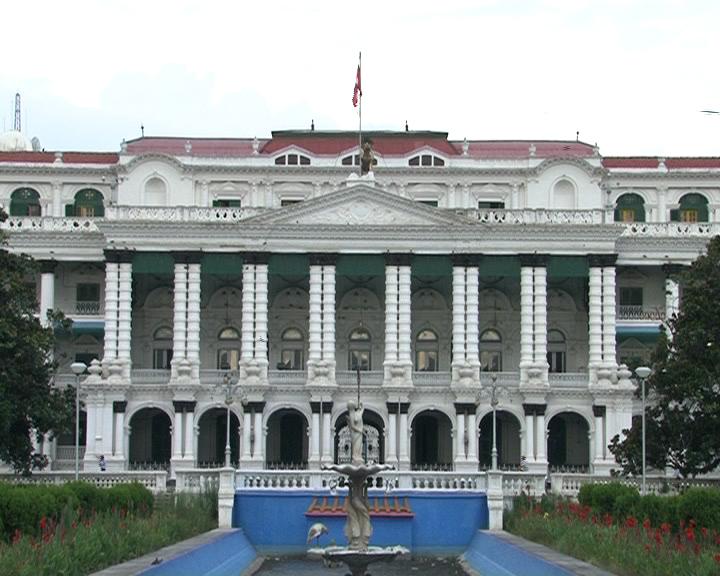
Nepal Rastra bank has published the current macroeconomic and financial situation of Nepal which is based on Ten Months' Data of 2017/18 .
Macroeconomic Outlook
1. The overall economic activity is expected to remain on track as reflected in the recent GDP estimates by the central Bureau of Statistics (CBS) for 2017/18. The estimate of real GDP growth of about 6 percent has been broad-based with slightly lower than expected growth in agriculture on account of widespread flood and inundation in the southern plain at the beginning of the current fiscal year. The report on economic activities recently released by Nepal Rastra Bank shows a rise in the industrial capacity utilization to 58 percent during six months of 2017/18 from 54.2 percent a year ago. Likewise, construction, mining and quarrying as well as tourism are expected to maintain a growth momentum in 2017/18. The government of Nepal in its annual budget recently released has set the growth target of around 8 percent, which reflects a sustained rise in economic activity going forward.
2. Despite signs of inflationary pressure emerging, the y-o-y consumer inflation (CPI) decelerated to 4.1 percent in mid-May 2018 from 5.3 percent in the previous month due to the fall in price of some essential items. This indicates a subdued annual average inflation compared to initial forecast for 2017/18. The inflation outlook is contingent upon the behavior of international oil prices including exchange rate of Nepalese currency vis-à-vis the US
dollar.
3. On the external front, current account deficit widened further to Rs. 191 billion in ten months of 2017/18, on account of elevated level of imports. However, workers’ remittances saw a resilient growth of 7 percent in ten months of 2017/18 compared to a growth of 5.2 percent a year ago. Likewise, the accumulation of international reserves of Rs. 1072.85 billion is sufficient to cover the prospective import of goods and services for 9.6 months.
4. On the financial sector, the y-o-y credit growth of 19.6 percent continued to exceed the deposit growth of 16 percent in mid-May 2018. The gap between credit and deposit is exerting pressures on lending rates. However, the weighted average deposit rate remained contained at 6.6 percent in mid-May 2018, reflecting its anchoring role especially for lending rates.
Inflation, Salary and Wage Rate
Consumer Price Inflation
5. The y-o-y consumer price inflation which had peaked at 6 percent in mid-March 2018 further deceleraed to 4.1 percent in mid-May 2018 owing to fall in price of some essential items. A year ago, the y-o-y consumer price inflation rate was 3.4 percent.
Food Inflation
6. Food inflation rose 3.2 percent in mid-May 2018 from 0.2 percent a year ago. A surge in prices of vegetables, fruits, ghee and oil, milk products and eggs, among others, contributed to the rise in food inflation in the review
period relatively to that of last year.
Non-food Inflation
7. Non-food inflation has moderated to 4.8 percent in mid-May 2018 from 6.0 percent a year ago. A slower growth in prices of clothes and footwear, housing and utilities, furnishing and household equipment, among others accounted for a moderation in non-food inflation in the review month.
Region-wise Consumer Price Inflation
8. The Mountain region witnessed relatively higher rate of inflation of 6.3 percent followed by 5.7 percent in Hill, 4.0 percent in Terai and 3.3 percent in the Kathmandu Valley. In the corresponding period of the previous year, these regions had witnessed inflation rates of 2.8 percent, 4.0 percent, 3.6 percent and 1.9 percent respectively.
Wholesale Price Inflation
9. The y-o-y wholesale price inflation increased to 2.0 percent in mid-May 2018 from 1.5 percent a year ago. A slight pick up in wholesale price inflation was on account of rise in prices of petrolium products.
National Salary and Wage Rate Index
10. The y-o-y growth in salary and wage rate index moderated to 6.4 percent in mid-May 2018 from 14.9 percent a year ago. In the review period, the salary index increased 9.4 percent, while the wage rate index grew 5.6 percent.
External Sector
Merchandise Trade
11. During ten months of 2017/18, merchandise exports increased 9.2 percent to Rs. 66.65 billion compared to an increase of 9.8 percent in the same period of the previous year. Destinationwise, exports to India, China and other countries increased 7.1 percent, 87.4 percent and 7.7 percent in the review period. Commodity-wise, exports of cardamom, jute sackings polyester yarn, thread, ginger, among others, increased whereas exports of G.I. pipes, juice, jute twines, woolen carpet, pashmina, among others, decreased in the review period.
12. The growth in merchandise imports remained elevated at 21.9 percent to Rs. 985.83 billion in the review period compared to an increase of 34.9 percent in the same period of the previous year. Source-wise, imports from India, China and other countries increased 23.4 percent, 22.3 percent and 17.2 percent respectively in the review period. Commodity wise imports of petroleum products, other machinery & parts, vehicles & spare parts, cement, M.S. billet, among others, increased whereas imports of agri. equip. & parts, aircraft spareparts, sanitaryware, small cardamom, zinc ingot, among others, decreased in the review period.
13. Based on customs points, the exports through Birgunj Customs Office, Krishnanagar Customs Office, Jaleshawr Customs Office and Kanchanpur Customs Office decreased whereas exports from other customs points increased in the review period. On the import side, imports through Dry Port Customs Office and Kanchanpur Customs Office decreased whereas imports through other customs points increased in the review period.
14. As a consequence of elevated level of imports relative to exports, total trade deficit widened 22.9 percent to Rs. 919.18 billion in ten months of 2017/18. The export-import ratio declined to 6.8 percent in the review period from 7.5 percent in the corresponding period of the previous year.
Services
15. The total services receipts and expenses increased 6.3 percent and 13 percent respectively in the review period. As a result, net services receipts turned into a deficit of Rs. 0.26 billion in the review period as against a surplus of Rs. 7.76 billion in the same period of the previous year. Under the services account, travel receipts increased 11.8 percent to Rs. 57.01 billion in the review period. Such receipts had increased 44.8 percent in the same period of the previous year.
Workers' Remittances
16. The workers' remittances increased 7 percent to Rs. 606.68 billion in the review period compared to a rise of 5.2 percent in the same period of the previous year. However, net transfer receipts decreased 0.1 percent to Rs. 692.23 billion in the review period. Such receipts had increased 10.3 percent in the same period of the previous year.
17. Based on approval, the number of Nepalese workers going for foreign employment (except renew entry) fell by 6 percent in the review period. It had decreased 3.9 percent in the same period of the previous year, too.
Current Account and BOP Position
18. The current account deficit widened further to Rs. 191.02 billion in the review period from a deficit of Rs. 7.57 billion in the same period of the previous year. The elevated level of imports widened the current account deficits. As a result, the overall BOP turned into a deficit of Rs. 18.93 billion in contrast to a surplus of Rs. 53.81 billion in the same period of the previous year.
19. In the review period, the flow of foreign direct investment (FDI) amounted to Rs. 15.51 billion compared to Rs. 11.61 billion in the corresponding period of the previous year.
Foreign Exchange Reserves
20. The gross foreign exchange reserves decreased 0.6 percent to Rs. 1072.85 billion as at mid-May 2018 from Rs. 1079.43 billion as at mid-July 2017. Of the total foreign exchange reserves, reserves held by NRB increased 4.3 percent to Rs. 966.91 billion as at mid-May 2018 from Rs. 927.27 billion as at mid-July 2017. The reserves of banks and financial institutions (except NRB) decreased 30.4 percent to Rs. 105.94 billion as at mid-May 2018 from Rs. 152.17 billion as at mid-July 2017. The share of Indian currency in total reserves stood at 24 percent as at mid-May 2018.
Foreign Exchange Adequacy Indicators
21. Based on the imports of ten months of current fiscal year, the foreign exchange holdings of the banking sector are sufficient to cover the prospective merchandise imports of 11 months, and merchandise and services imports of 9.6 months. The ratio of reserve-to-GDP, reserve-toimports and reserve-to-M2 stood at 35.7 percent, 80.2 percent and 37 percent respectively as at mid-May 2018. Such ratios were 40.8 percent, 95.2 percent and 41.6 percent as at mid-July 2017.
Price of Oil and Gold
22. The price of oil (Crude Oil Brent) in the international market increased 59.3 percent to USD 78.17 per barrel in mid-May 2018 from USD 49.08 per barrel a year ago. The price of gold increased 7.2 percent to USD 1319.85 per ounce in mid-May 2018 from USD 1231.25 per ounce a year ago.
Exchange Rate
23. Nepalese currency vis-à-vis US dollar depreciated 4.3 percent in mid-May 2018 from the level of mid-July 2017. It had appreciated 4 percent in the same period of the previous year. The buying exchange rate per US dollar stood at Rs. 107.43 in mid-May 2018 compared to Rs. 102.86 in mid-July 2017.
Fiscal Situation
Budget Deficit/ Surplus
24. The budget deficit of the Government of Nepal (GoN) increased to Rs.138.23 billion in ten months of 2017/18 from a deficit of Rs.0.51 billion in the corresponding period of the previous year.
Government Expenditure
25. In the review period, total government expenditure (cash basis) stood at Rs.727.56 billion. Such expenditure was Rs.478.63 billion in the corresponding period of the previous year.
26. In the review period, recurrent expenditure stood at Rs.547.22 billion, which was Rs.344.99 billion in the corresponding period of the previous year. In the review period, capital expenditure increased 42.4 percent to Rs. 128.48 billion. Such expenditure was Rs.90.24 billion in the correspond
Government Revenue
27. In the review period, the government revenue collection increased 21.1 percent to Rs.562.54 billion. Such revenue had increased 32.6 percent to Rs.464.42 billion in the corresponding period of the previous year.
Treasury Position of the GoN
28. The treasury surplus amounted to Rs. 269.51 billion (including Rs.124.47 billion balances on Local Authorities’ Accounts) as of mid-May 2018.
Monetary Situation
Money Supply
29. Broad money (M2) increased 11.9 percent in the review period compared to a rise of 10.4 percent in the corresponding period of the previous year. On y-o-y basis, M2 expanded 17.1 percent in mid-May 2018.
30. The net foreign assets (NFA after adjusting foreign exchange valuation gain/loss) decreased Rs. 18.93 billion (1.9 percent) in the review period compared to an increase of Rs. 53.81 billion (5.6 percent) in the corresponding period of the previous year.
31. Reserve money decreased 2.0 percent in the review period compared to an increase of 5.0 percent in the corresponding period of the previous year. On y-o-y basis, reserve money increased 12.1 percent in mid-May 2018.
Domestic Credit
32. Domestic credit increased 15.2 percent in the review period compared to an increase of 10.5 percent in the corresponding period of the previous year. On y-o-y basis, domestic credit increased 25.8 percent in mid-May 2018.
33. Claims of monetary sector on the private sector increased 18.6 percent in the review period compared to a growth of 17.1 percent in the corresponding period of the previous year. On y-oy basis, such claims increased 19.6 percent in mid- May 2018.
Deposit Collection
34. Deposits at Banks and Financial Institutions (BFIs) increased 11.1 percent in the review period compared to a growth of 9.3 percent in the corresponding period of the previous year. On y-o-y basis, deposits at BFIs expanded 16 percent in mid-May 2018.
35. Out of the total deposits at the BFIs, while the share of demand deposit increased from 7.8 percent a year ago to 8.6 percent in mid-May 2018, the share of fixed deposit rose from 42.6 percent a year ago to 45.2 percent in mid- May 2018. However, the share of saving deposits decreased from 36.6 percent a year ago to 35.8 percent in the review month.
36. The share of institutional deposits in total deposit of BFIs stood at 44.14 percent in mid-May 2018. Such share was 46.2 percent a year ago.
Credit Disbursement
37. Credit to the private sector from BFIs increased 18.1 percent in the review period compared to a growth of 16.6 percent in the corresponding period of the previous year. In the review period, private sector credit from commercial banks, development banks and finance companies increased 18.3 percent, 18.2 percent and 11.4 percent respectively. On y-o-y basis, credit to the private sector from BFIs increased 19.8 percent in mid May 2018.
38. Of the total outstanding credit of BFIs in mid-May 2018, 61.3 percent is against the collateral of land and building and 15.0 percent against the collateral of current assets (such as agricultural and non-agricultural products). Such ratios were 61.0 percent and 13.9 percent respectively a year ago.
39. Trust receipt loan extended by commercial banks increased 80.2 percent (Rs. 51.76 billion) to Rs. 116.29 billion in the review period compared to an increase of 1.9 percent in the corresponding period of the previous year.
40. In the review period, while hire purchase loan increased 11.1 percent, overdraft loan rose 13.6 percent. Likewise, real estate loan (including residential personal home loan) increased 14
percent in the review period.
Liquidity Management
41. In the review period, NRB mopped up Rs. 130.25 billion liquidity through open market operations. Of which, Rs. 42.35 billion was mopped up under deposit collection auction, Rs. 3.15 billion through 14 days deposit collection auction under interest rate corridor and Rs. 84.75 billion through reverse repo auction on a cumulative basis. Rs. 101.10 billion liquidity was mopped up in the corresponding period of the previous year.
42. In the review period, Rs. 107.34 billion liquidity was injected. Of which, Rs. 69.72 billion was injected through 14 days repo auction under interest rate corridor and Rs. 37.62 billion through outright purchase auction. In the corresponding period of the previous year, Rs. 61 billion liquidity was injected.
43. In the review period, BFIs utilized Rs. 38.33 billion Standing Liquidity Facility (SLF). In the corresponding period of the previous year, BFIs had utilized such facility of Rs. 62.39 billion.
44. In the review period, NRB injected net liquidity of Rs. 362.21 billion through the net purchase of USD 3.50 billion from foreign exchange market. Net liquidity of Rs. 360.63 billion was injected through the net purchase of USD 3.38 billion in the corresponding period of the previous year.
45. NRB purchased Indian currency (INR) equivalent to Rs. 427.40 billion through the sale of USD 4 billion, Euro 40 million and GBP 60 million in the review period. INR equivalent to Rs. 374.38 billion was purchased through the sale of USD 3.38 billion and Euro 110 million in the corresponding period of the previous year.
Refinance
46. NRB has been providing refinance facility aimed at expanding credit to the productive sector along with promoting export. As of mid-May 2018, the outstanding refinance amounted to Rs. 16.47 billion.
47. A sum of Rs. 1.51 billion housing loan at a concessional interest rate of 2 percent has been extended by the BFIs to the earthquake victims as of mid-May 2018. NRB provides refinance facility to BFIs at a zero percent interest to facilitate housing loan to earthquake victims.
48. As of mid- May 2018, the number of beneficiaries of the 5 percent interest subsidized lending scheme of the Government of Nepal stood at 7,704. They availed subsidized loans for selected agriculture and livestock businesses. Under this provision, Rs. 8.23 billion loan extended by BFIs is outstanding and Rs. 474 million interest subsidy has been provided.
Inter-bank Transaction
49. In the review period, inter-bank transactions among commercial banks stood at Rs. 972.33 billion and among other financial institutions (excluding transactions among commercial banks) amounted to Rs. 34.51 billion. Such transactions were Rs. 890.83 billion and Rs. 321.81 billion respectively in the corresponding period of the previous year.
Interest Rates
50. The weighted average 91-day Treasury bill rate increased to 5.15 percent in the tenth month of 2017/18 from 0.78 percent a year ago. The weighted average inter-bank transaction rate among commercial banks, which was 2.73 percent a year ago, increased to 4.53 percent in the review month. Likewise, the average base rate of commercial banks increased to 10.94 percent in the review month from 9.0 percent a year ago.
Merger/Acquisition
51. The number of BFIs involved in merger and acquisition has been increasing after the introduction of merger/acquisition policy aimed at strengthening financial stability. So far, 162 BFIs (including ‘D’ class) were involved in merger and acquisition. Out of which, the license of 121 BFIs was revoked, thereby forming 41 BFIs.
Financial Access
52. Of the total 753 local bodies formed in the process of implementing federalism, commercial banks have shown their presence in 531 bodies as of mid-May 2018. Province wise presence of commercial banks in local bodies is presented in Box 5 as of mid-May 2018.
Capital Market
53. The NEPSE index on y-o-y basis decreased 19.3 percent to 1338.2 points in mid-May 2018. This index had increased 12 percent to 1658.6 points in mid-May 2017. Such index was 1582.7 points in mid-July 2017.
54. The stock market capitalization on y-o-y basis decreased 18.5 percent to Rs. 1570.27 billion in mid-May 2018. This had increased 20.5 percent a year ago. The ratio of market capitalization to GDP of 2017/18 stood at 52.2 percent in mid-May 2018. This ratio was 72.8 percent a year ago. In the total market capitalization, the share of banks, financial institutions and insurance companies stood at 81.2 percent, hydropower 4.6 percent, manufacturing and processing companies 2.6 percent, hotels 1.7 percent, trading 0.1
percent, and others 9.9 percent respectively.
55. During the tenth month of 2017/18, the total turnover of the securities decreased 25.2 percent to Rs.12.78 billion. The turnover of the securities had decreased 5 percent to Rs.17.08 billion in the corresponding period of the previous year.
56. Due to the merger and acquisitions of BFIs, the total number of companies listed at the NEPSE decreased to 196 in mid-May 2018 from 210 a year ago. Of the listed companies, 148 are BFIs (including insurance companies), 18 manufacturing and processing industries, 18 hydropower companies, 4 hotels and trading institutions and 4 other sectors.
57. On y-o-y basis, total paid-up value of the listed shares increased 23.7 percent to Rs.340.86 billion in mid-May 2018. Total additional securities worth Rs.143.94 billion were listed in the NEPSE during the review period. These consisted of ordinary shares of Rs.47.47 billion, right shares of Rs.29.26 billion, bonus shares of Rs.30.12 billion and government securities of Rs.36.47 billion.