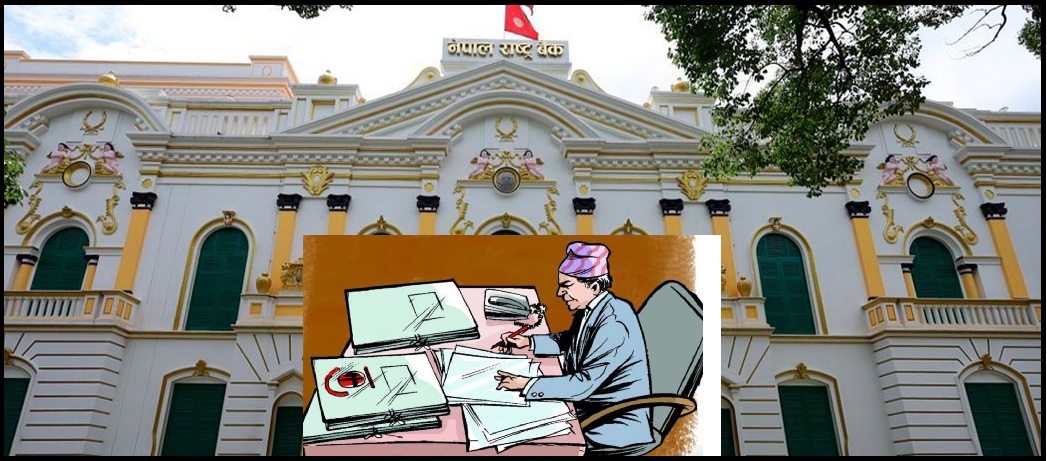
 Banking Khabar / Preparations for Nepal’s fiscal year 2083/84 budget are now moving at full pace. More than just an annual calculation of revenue and expenditure, the budget has increasingly become a political, economic, and administrative instrument that will determine the direction of the country’s economy in the coming years. According to the Constitution, the government is required to present the national budget in the Federal Parliament on Jestha 15 each year. As the deadline approaches, intense discussions are underway among the Ministry of Finance, the National Planning Commission, Nepal Rastra Bank, and various ministries.
Government ministries have already submitted their budget demands to the Finance Ministry. While most ministries have sought larger allocations, the government itself is under pressure to reduce spending due to limited resources. Weak capital expenditure, failure to meet revenue targets, rising public debt, and sluggish economic activity have made this year’s budget particularly challenging. The central debate now revolves around a crucial question: should Nepal present a large-sized budget, or a realistic and implementable one?
In recent years, successive governments announced ambitious budgets but struggled to spend allocated funds effectively. As a result, criticism has intensified over weak implementation and inefficient public spending. This time, there is growing consensus that the budget should be designed based on the country’s actual revenue capacity and spending efficiency rather than political ambition alone.
The Finance Ministry is currently collecting suggestions from business leaders, bankers, industrialists, tourism entrepreneurs, contractors, and representatives of the private sector. Organizations such as the Federation of Nepalese Chambers of Commerce and Industry (FNCCI), Nepal Chamber of Commerce, and other business groups are demanding tax relief, investment-friendly policies, and production-oriented incentives. The banking sector, meanwhile, is seeking policies focused on credit expansion, improvement in the investment climate, management of rising non-performing loans, and stability in interest rates.
Although banks currently possess adequate loanable funds, private sector investment remains weak due to declining business confidence and subdued market demand. This has placed additional pressure on the government to bring policies capable of restoring trust among investors and entrepreneurs.
Contractors and infrastructure developers are also demanding the clearance of pending government payments. Delayed payments in large infrastructure projects have created financial strain across the construction sector. As a result, the government is expected to prioritize incomplete and nationally significant projects in the upcoming budget. Discussions are also underway regarding social security allowances, salary adjustments for civil servants, and youth-focused employment programs.
The Challenges Facing the Budget
The most pressing challenge remains weak revenue growth. Declining customs revenue, lower imports, and sluggish economic activities have significantly constrained the government’s fiscal capacity. At the same time, coordination between Nepal Rastra Bank and the Ministry of Finance has become increasingly important. Policymakers are emphasizing the need for stronger alignment between monetary and fiscal policy, particularly in areas such as interest rates, credit flow, capital markets, real estate, and productive industries.
The government is reportedly preparing to prioritize agriculture, energy, information technology, tourism, and entrepreneurship in this year’s budget. There is also growing discussion about introducing startup-focused and digital economy programs aimed at reducing youth migration abroad by creating domestic employment opportunities.
Another critical issue is Nepal’s rising public debt. Questions are increasingly being raised over the government’s dependence on loans and foreign assistance to sustain annual budgets. Critics argue that current expenditure has continued to rise faster than development expenditure, creating long-term fiscal vulnerabilities.
Politically, the budget process has also entered a highly sensitive phase. Coalition partners are reportedly pressuring the government to include their respective programs and interests. Meanwhile, lawmakers continue to demand projects and budget allocations for their own constituencies, repeating a long-standing political trend.
Economic analysts argue that Nepal now needs a “credible and production-oriented budget” rather than a merely “popular budget.” Unless the budget focuses on restoring private sector confidence, generating employment, strengthening agriculture and industry, and controlling unnecessary government spending, meaningful economic recovery may remain elusive.
In this context, Nepal’s budget-making process is no longer just a constitutional formality. It has evolved into a major national debate over how to revive a struggling economy and rebuild public confidence.
What the Economy Needs Most
Nepal’s economy has been under multidimensional pressure in recent years. Even before fully recovering from the COVID-19 pandemic, the country was confronted with high interest rates, declining investment, weak consumption, a slowdown in construction activities, the cooperative sector crisis, falling revenue collection, weakened business confidence, and liquidity imbalances within the banking system.
Although some external indicators appear to be improving, the domestic economy remains fragile.
In such circumstances, the upcoming budget must go beyond being a routine fiscal statement. It needs to become a strategic policy document capable of revitalizing production, employment, investment, financial stability, and public confidence. If the government prioritizes populist announcements and distribution-oriented programs without realistically addressing current economic challenges, the crisis could deepen further.
One of the budget’s foremost priorities must be restoring confidence in the private sector, which remains the primary engine of Nepal’s economy. Industries, trade, tourism, construction, banking, insurance, and information technology are all heavily driven by private investment. However, high borrowing costs, weak consumer demand, policy instability, and regulatory pressure have discouraged entrepreneurs and investors. Many industries are operating below capacity, while new investment expansion has nearly stalled.
The budget therefore needs to provide tax incentives, interest subsidies, production-based support, and clear investment protection measures to help revive industrial and business activities.
Production and Agriculture Must Take Priority
Strengthening productive industries is essential for Nepal’s long-term economic sustainability. The country’s heavy dependence on imports continues to increase pressure on foreign currency reserves. Policies encouraging domestic production in agriculture, energy, tourism, and small and medium enterprises are now more necessary than ever.
Industries capable of replacing imports should receive tax exemptions, concessional loans, and infrastructure support. A stronger production sector would not only increase employment opportunities but also help improve revenue collection and reduce Nepal’s widening trade deficit.
Agriculture, despite employing a large portion of the population, continues to suffer from chronic structural problems, including shortages of fertilizers, irrigation, storage facilities, and market access. Farmers often fail to receive fair prices for their products, while the country simultaneously spends billions importing agricultural goods.
The budget must therefore present a clear strategy to modernize and commercialize agriculture through crop insurance, low-interest agricultural loans, cold storage facilities, agro-processing industries, and technology-based farming systems.
Youth Migration and the Digital Economy
The growing migration of Nepalese youth abroad has become one of the country’s most serious economic and social challenges. The lack of sufficient employment opportunities at home has forced many skilled and energetic young people to seek work overseas, weakening Nepal’s long-term productive capacity.
To address this, employment generation must become a central objective of the budget. Special programs targeting construction, agriculture, tourism, information technology, energy, and startups are urgently needed.
The information technology sector, in particular, presents a major opportunity for Nepal. As the global digital economy expands rapidly, Nepal can benefit through IT services, freelancing, software development, and digital entrepreneurship. Tax incentives for IT companies, startup funds, digital infrastructure, and skill development programs could create significant domestic employment opportunities for young people.
Financial Stability and Banking Sector Reform
The stability of Nepal’s banking and financial system is another critical priority. Rising non-performing loans, repayment difficulties among businesses, and cautious lending practices by banks have slowed overall economic activity. Meanwhile, the cooperative sector crisis has further weakened public trust in the financial system.
The budget should therefore introduce measures such as refinancing facilities, interest subsidies, and loan restructuring support, particularly for small and medium-sized enterprises. Stronger regulation, transparency, and depositor protection mechanisms are also essential for reforming the cooperative sector and rebuilding confidence.
Infrastructure, Energy, and Tourism
Infrastructure development remains one of the most effective tools for economic recovery. Investments in roads, hydropower, irrigation, airports, industrial zones, and digital infrastructure can generate long-term economic growth. However, many projects in Nepal continue to suffer from delays, weak implementation, and political interference.
Rather than introducing numerous new projects, the budget should prioritize the completion of unfinished and nationally strategic infrastructure projects.
Hydropower, in particular, has the potential to become the foundation of Nepal’s long-term prosperity. Despite possessing vast water resources, Nepal has yet to fully utilize its hydropower potential. The budget should include clear policies for energy production, transmission expansion, and electricity exports. Expanding energy exports to markets such as India and Bangladesh could significantly reduce Nepal’s trade deficit while increasing foreign exchange earnings.
Tourism also requires renewed focus. Although Nepal possesses enormous tourism potential, weak infrastructure, limited international promotion, and inconsistent service quality have prevented the sector from reaching its full capacity. Policies promoting tourism infrastructure, religious tourism, adventure tourism, and international marketing could generate benefits across hotels, transportation, handicrafts, and local businesses.
Revenue Reform and Better Governance
Improving Nepal’s revenue system is equally important. Weak economic activity has reduced government income, but raising taxes alone cannot solve the problem. Instead, the tax system must become simpler, more transparent, and business-friendly. Expanding the tax base, digitizing tax administration, and integrating the informal economy into the formal system are likely to produce better long-term results than increasing tax rates.
At the same time, Nepal cannot strengthen its economy without reforming public expenditure management. Poor capital expenditure performance has remained a long-standing problem. Even when budgets are allocated, spending delays prevent development projects from generating meaningful economic impact.
The budget must therefore improve spending efficiency, strengthen transparency in public procurement, and enhance implementation capacity.
Good governance and policy stability are also fundamental to economic recovery. Corruption, policy inconsistency, bureaucratic delays, and political interference continue to damage Nepal’s investment environment. Without stronger transparency, accountability, and digital governance reforms, economic recovery programs may fail to produce sustainable results.
A Budget That Restores Hope
Nepal’s current economic challenges are not merely financial — they are also a crisis of confidence. Businesses, investors, and ordinary citizens increasingly feel uncertain about the future. In such an environment, the upcoming budget must provide more than short-term relief. It must offer a credible roadmap for rebuilding trust, encouraging investment, and transforming Nepal into a production-oriented economy.
Ultimately, the fiscal year 2083/84 budget should not be viewed simply as a distribution of government expenditure. It must serve as a strategic blueprint for economic recovery. Only by prioritizing production growth, employment creation, private sector confidence, financial stability, agricultural modernization, infrastructure development, energy exports, tourism promotion, and good governance can Nepal realistically revive its economy and achieve long-term stability.
Otherwise, short-term populist programs may generate temporary political advantage, but the country risks falling into an even deeper and more prolonged economic crisis.