 Banking Khabar / The Government of Nepal has unveiled a Rs 2.124 trillion budget for the upcoming fiscal year 2026/27, outlining an ambitious spending plan aimed at supporting economic growth, infrastructure development, and fiscal stability.
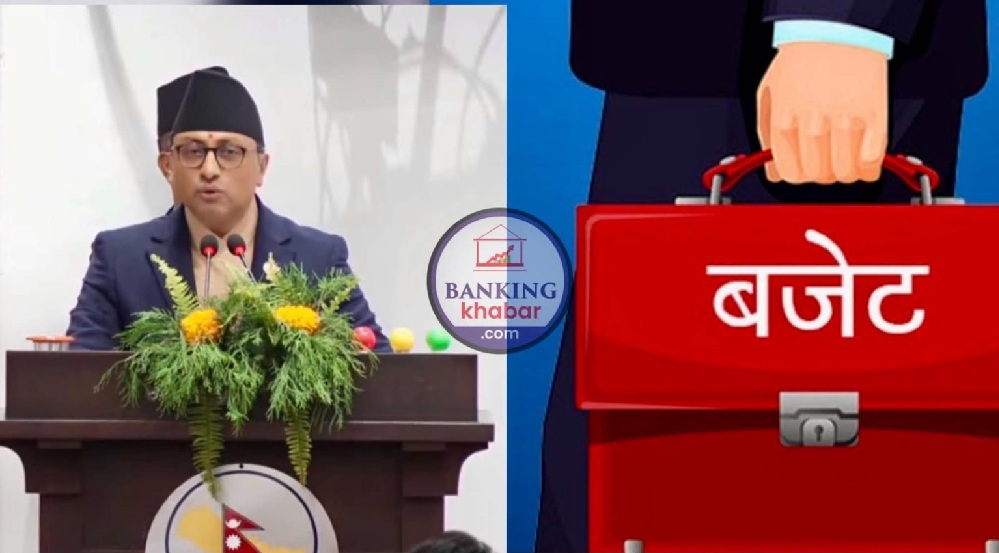
Presenting the annual budget before a joint session of the Federal Parliament, Finance Minister Dr. Swarnim Wagle announced a total expenditure estimate of Rs 2.124 trillion (Rs 2.12434 trillion) for the next fiscal year, marking a notable increase from the Rs 1.964 trillion budget allocated for the current fiscal year.
Budget Allocation
Of the total budget, the government has allocated:
- Rs 1.270 trillion for recurrent (current) expenditures, covering administrative operations, public services, salaries, social security, and other routine government spending.
- Rs 431.10 billion for capital expenditure, which will finance infrastructure projects, development programs, and long-term investments.
- Rs 422.64 billion for financial management, including debt servicing and other financial obligations.
Funding Sources
To finance the ambitious expenditure plan, the government has projected a combination of revenue generation, foreign assistance, and borrowing.
The government expects to collect Rs 1.405 trillion in revenue during the fiscal year. In addition, it anticipates receiving Rs 61.74 billion in foreign grants from development partners.
To bridge the remaining financing gap, the government plans to mobilize substantial domestic and external borrowing. The budget estimates include:
- Rs 247.28 billion in foreign loans
- Rs 410 billion in domestic borrowing
Overall, the government has announced that approximately Rs 657.29 billion of the required resources will be managed through various borrowing arrangements.
Focus on Growth and Fiscal Management
The budget comes at a time when Nepal is seeking to revive private sector confidence, stimulate investment, and accelerate economic activity amid ongoing challenges in the banking sector and slower-than-expected capital spending.
With a larger budget envelope than the current fiscal year, the government aims to balance development priorities with fiscal discipline while investing in infrastructure, employment generation, digital transformation, and private-sector-led growth.
The new budget is expected to play a pivotal role in shaping Nepal’s economic trajectory in the coming year, as policymakers seek to strengthen economic resilience and create a more investment-friendly environment.